

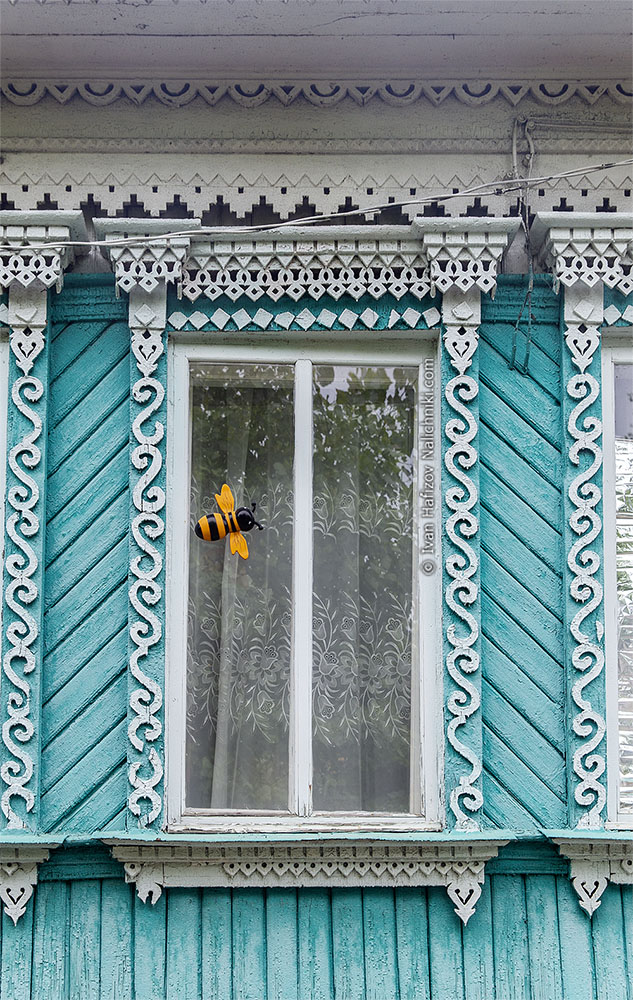
— …Oh, our whole street here is nothing but history! Before it became Lenin Street it used to be called… Not Merchants' Street, but what was it… Nobles' Street! Dvoryanskaya! The wealthy lived here. We had a priest here. These two houses, — she points at the neighbors' — two brothers lived there who dealt in meat. There were gates here, and their yard ran from there — the woman gestures somewhere to the left — all the way to the next street! Imagine! And the gates were right here. And our house stood on their land.
— And were the gates also wooden? — I can already picture them.
— No, the gates were stone. Our old neighbor, she used to tell me all this. She was very old, she was there when they left. Her husband was their nephew. The priest's. And she told me that everyone who lived here was very wealthy.
— I can see every house on this street is more beautiful than the last!
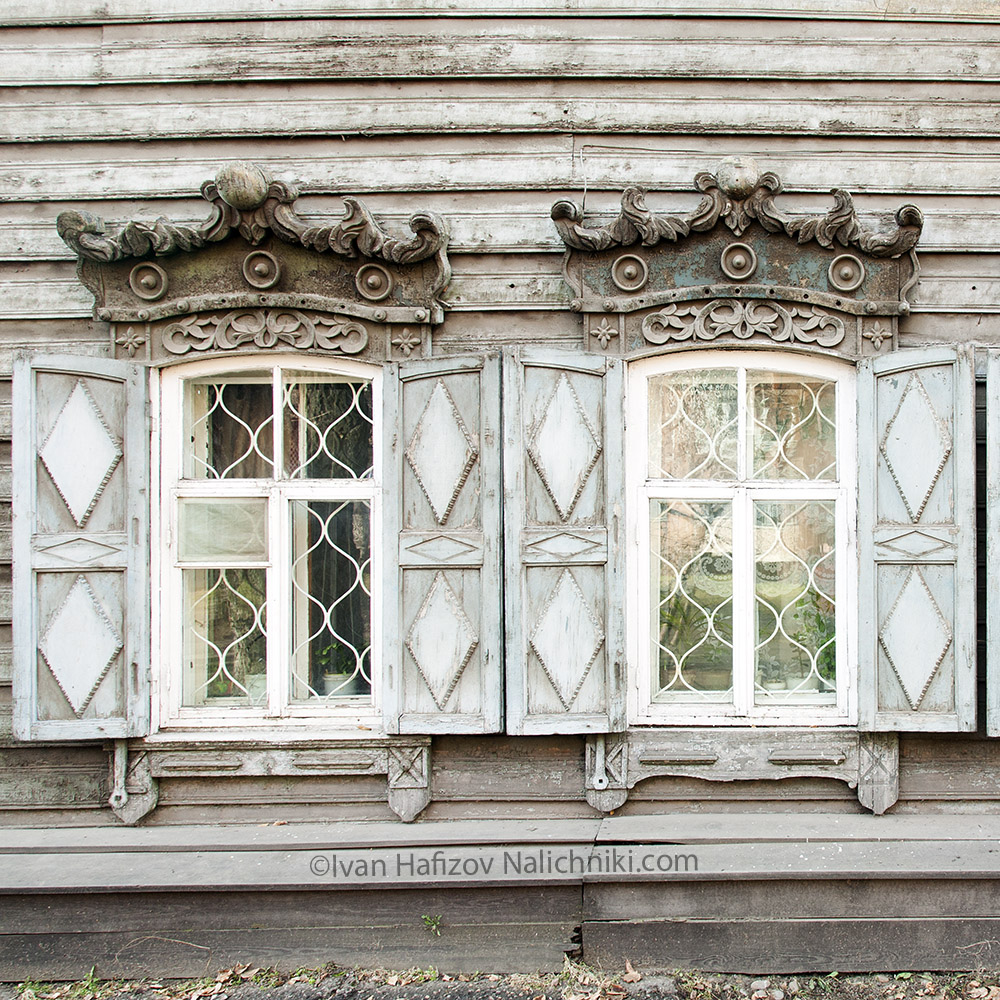
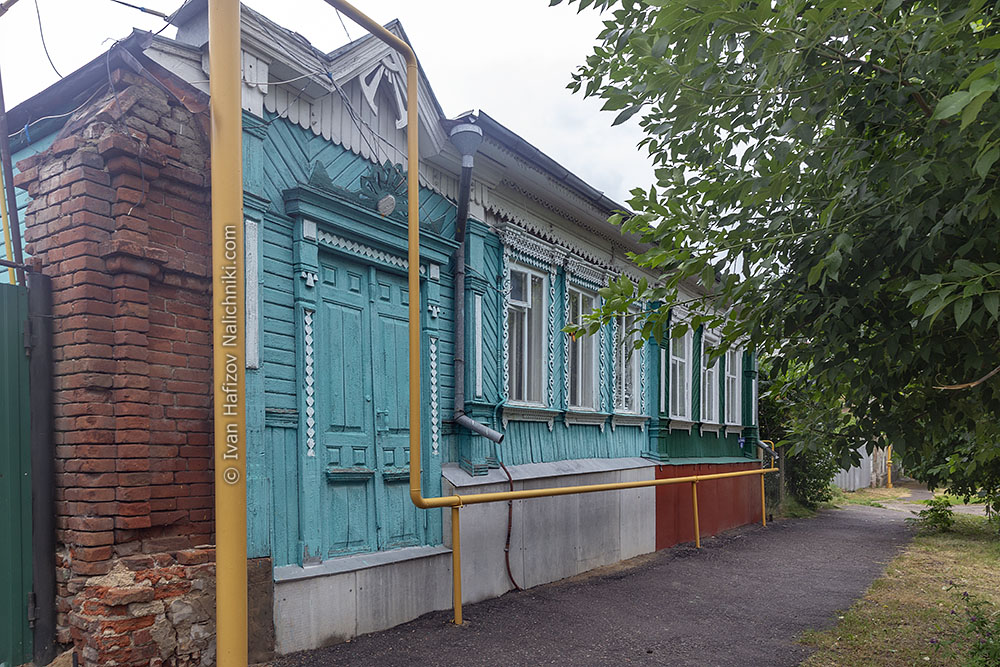
— Yes, yes, they're all old, yes. Only now they're stripping them, breaking off little pieces — she points at the carved cornice under the roof, at the facade — I feel really bad, the way they strip them off. Here too, my neighbors stripped everything off. They didn't feel like painting them.
For a few seconds we both look at the house, and I search for places where the neighbors might have broken off the carving, but strangely don't find any. And it's hard to believe, really — as if anyone would drag a ladder to the wall on purpose, out of spite, just to rip a piece of carving off from under the eaves! And at eye level there's almost nothing that could be pulled off.
Then she suddenly switches gears:
— People photograph our house a lot.
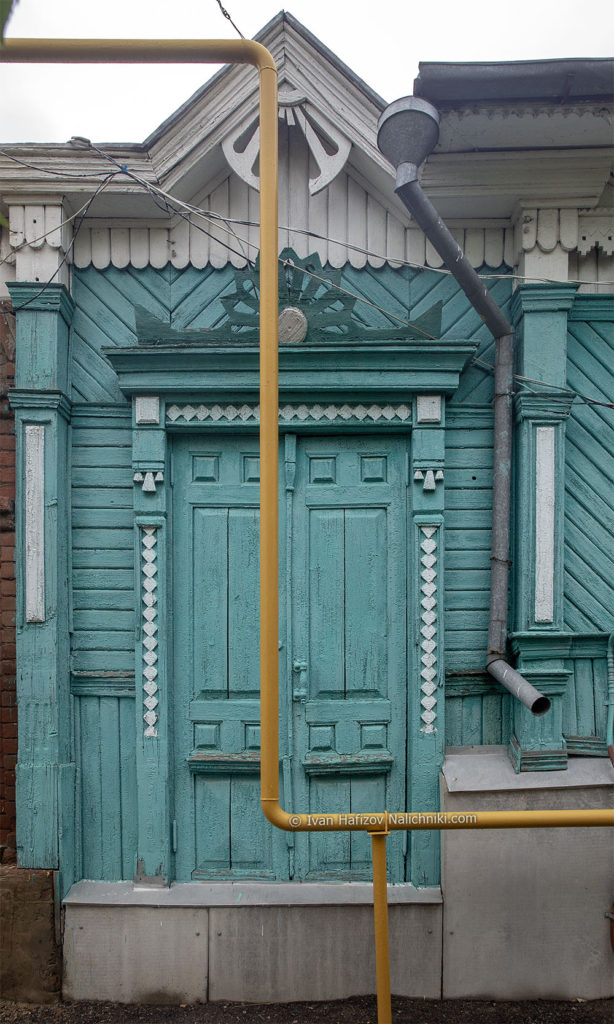
— No surprise! — I grab the chance to change the subject. — But listen, why did you have the pipe put there?!
— What pipe? — she looks at me, baffled.
— The gas pipe. Wasn't there probably a porch here before?
— I don't know. When we bought this house… There used to be an entrance here, we bought it already like this… Well, we ran the gas ourselves. And inside there's just a wall… A grandfather lived here before, he bricked up that doorway, made it into a wall, and that's it — now it's our bedroom there.
— Wait, so there's a wall behind the door?
— Yes. And the bedroom. Well there used to be a long hallway here, he divided it somehow, like into two rooms. And the pipe — we ordered it later, specifically like that.
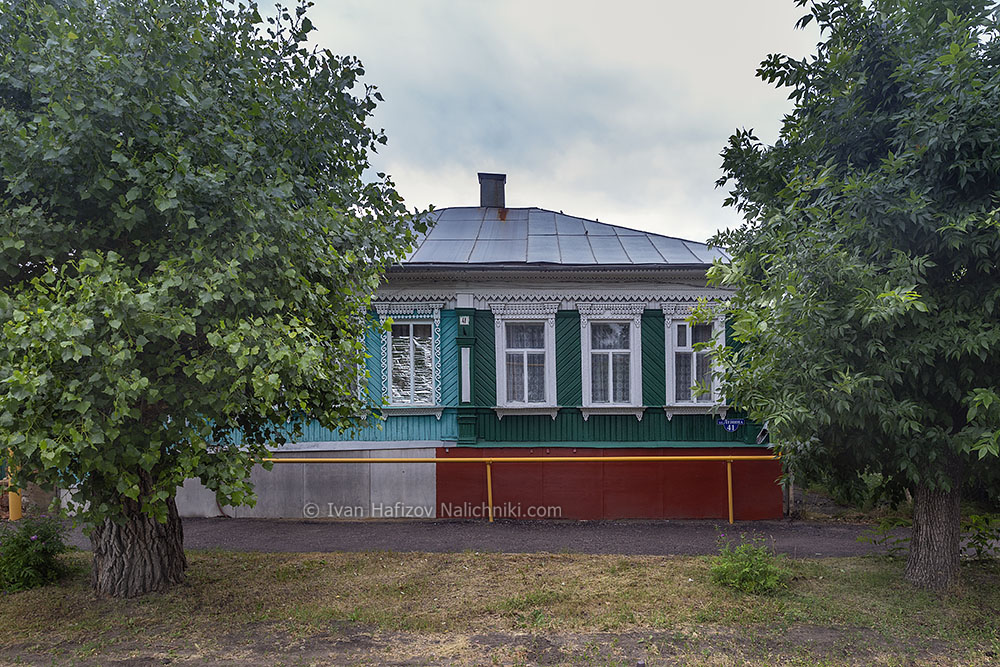
— Meaning they could have done it any way? Above the windows or below?! — I'm genuinely stunned: most houses here in Novokhopersk — and in plenty of other towns too, Borisoglebsk, Povorino — have the yellow gas pipe running straight across the windows! And now it turns out it didn't have to be that way!
— They could have. — she nods. — The ones that run across the windows, — the woman points at the neighboring buildings — those the government ran. But we paid for it ourselves. Because they don't care how. For them, whatever way they run it is fine. Some people of course also paid themselves for the same thing, it's just that if you route the pipe below or above the windows, it costs more. So the cheap way — maybe that's why some people did it that way too. But there it was the government running it, so… that's just how it is…
For a moment the homeowner goes quiet, hands on hips, looking the house over critically.
The day is still overall, and there are almost no cars here, but right above us in the tree branches some little birds are chattering and zipping around, stirring up a commotion and somehow, involuntarily, lifting the spirits…
— We need to fix that there, look, see it's falling… Everything's just from age… Yes… — then, remembering the conversation had started with a description of the gates, she continues — right here there were pillars. Right in the middle. They brought a tractor to break them down, couldn't do it at all. When the pillar finally fell, the masonry held — the bricks broke to pieces instead!
— Incredible! — I try to picture it. — And there was no desire to preserve them?
— No, not anymore. Not now — probably nobody would do it. Who would? There are no craftsmen left.
The woman sighs and adds thoughtfully:
— No craftsmen… Nobody with those hands anymore… Those craftsmen are just gone…
Then she shakes herself and returns to the start of the conversation:
— So there they were, those two brothers — my neighbor used to tell me — she'd say: "Young men, clumsy, unmarried, and they dealt in meat." They sold meat. Downstairs — they lived there at… Anyway, downstairs in the basement they had these hooks up on the ceiling, and they hung the meat on the hooks. And their workers lived there, the hired help… The brothers themselves lived upstairs: one brother on one floor, and the second on the other. Then when the Revolution came, they left and left everything to their nephew, and to this grandmother of mine. Only she didn't have as much land as us, they dekulakized her later. Look here — we step a little away from the house, she points at a house to the side — that house, it's all abandoned now, people left, all of that was the brothers' territory… And that — she points into the lane, deep down the street — all of that was theirs too. This is our yard, from here to the lilac bush. And now that's neighbors, that yard — they left that to grandma too — but they cut us off later, and originally the yard went all the way to that yellow pipe over there.
I spot the pipe, figure it's probably two hundred meters off. The woman continues:
— All of this was their land… then they dekulakized her, cut off everything and left her just up to the lilac. Then they made her plant trees here, there was nothing here back then.
— Why plant trees? — I can't quite follow.
— I don't know, that was Soviet power. Later on. Some reason they needed it. But at least they didn't exile this grandmother — she just lived on here. We've only been here thirty years ourselves, she told me a lot. Interesting! That house there — she turns her back to her own — a doctor lived there. And this one — we had a kindergarten later, before that it was a girls' gymnasium.
— Is it still a kindergarten? — I ask, not seeing the inevitable bright jungle gym or anything of the sort.
— It was a kindergarten, but now they moved social services here. Before that they were in the doctor's house, only that one's falling to pieces now…
— Oh, that beautiful white building with the crack? I think I saw it!
— Yes, there… A doctor lived there too. Really beautiful, yes… Everything there was his too… You've got a real feast here, our whole street is nothing but history… Nothing but history… Yes… now all we've got left is the history.