

...— Was this whole street built in the sixties?
— I often ask this to get a sense of the general picture of how a town was built.
— Earlier... Earlier. We did it in '61... The house was brought from a village — we wanted to add three more rows of logs — they took it apart and it turned out to be all rotten, with a woodworm just hanging in one of the beams. Had to build from scratch.
I was only thirteen at the time, and mama had just given birth to Kolya: there was a shelter in the yard out back, she was there with him, the little one, while papa was building the house. I helped.
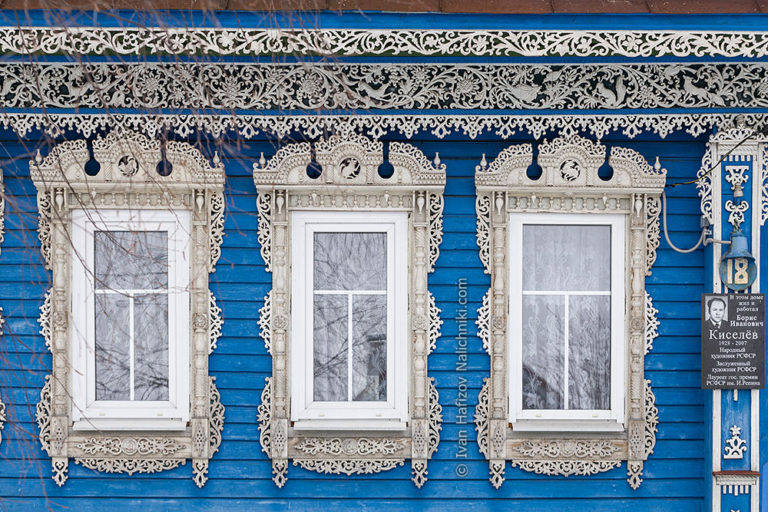
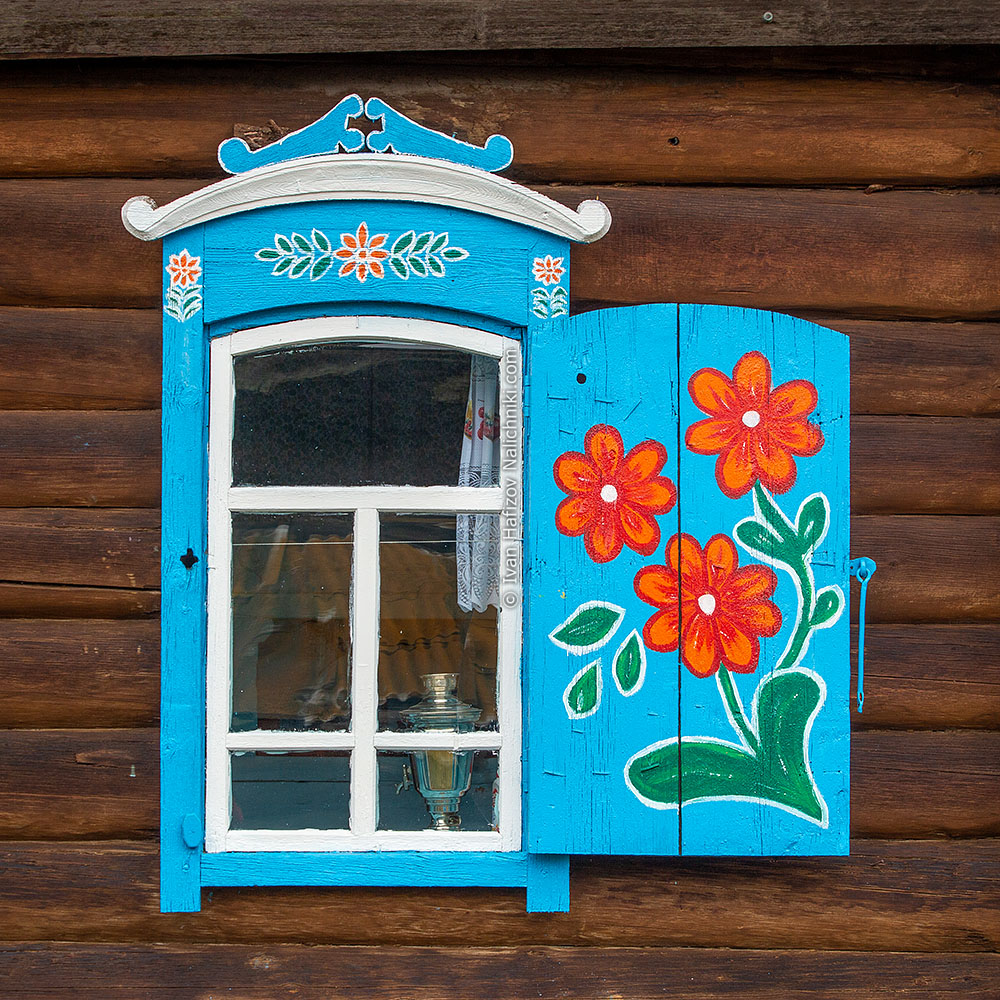
The house they're telling me about is beautiful — tall, on a raised foundation, with nalichniki in the local tradition. I'd already asked about those: their father hadn't made them himself; he'd ordered them from a local craftsman who in turn had learned his trade before the war from an old barrel-maker.
— Back then things were difficult — metal sheeting, everything had to be scrounged. But since there was a small child in the house, they gave us what we needed.
— What do you mean? Because there was a small child?
— Yes, people helped then. And we built the whole new house. Papa laid the roof himself — he was a tinsmith, the only one for miles around. Three o'clock, half past three in the afternoon, and there'd already be three or four people sitting here waiting.
— What for?
— For him to roof their house.
— A queue, you mean?
— Yes. "Tolya, you're the only one for this job."
My companion catches her breath and falls quiet for a few minutes. Our whole conversation is full of pauses: some to exchange a few words with people passing by — "Semyonovna, did you take down the shed or what?" — some to scratch the neck of a sad-eyed stray that wandered over: "Well, you little rascal, you were barking at me yesterday and now here you are making up!" — and some just to breathe: she's had an operation recently, and long conversations, I can tell, are still hard going.
... — And papa roofed the house, though he worried he couldn't use galvanized sheeting — there was none to be had. He told me afterwards: "I used five-millimeter sheeting, 'cabinet iron.' I was working at the factory then, and the director told me: Anatoly Mikhalych, you roof a building for me with that iron, and I'll do the same for you."
— He said to me: "This will last you your whole life — it'll never leak." And sure enough, here we are fifty years on and it hasn't leaked. But it's rusting, of course. It needs painting, needs care. But I've given up: mama died, my brothers want to sell and put me in an apartment…
The brothers, as far as I can tell, are now in the auto business, but she doesn't even know where.
— That's the way of things now — the richer people get, the greedier. And me — I have nothing, so take it all…
— So what it means for us… We'd each get three hundred thousand. If we sell for a million. And that's it — we couldn't get more than that. And it's a good house. There's a yard. There's a bathhouse of some kind in the yard. A separate boiler room. Lots of space inside, ceilings over three meters, high.
— Really? — I can't help exclaiming.
— Yes, very high ceilings. That money would last me a lifetime. For my life, I'd say, it would surely be enough.
— Our house is the most beautiful on the street. Yegor, the neighbor, wanted to buy it for his son. But the son dug in his heels: "I'll buy what I need where I need it." He's young, doesn't want to live close to his father — but the father wanted to have him nearby. So his father came to us and offered two million, but then the son backed out and found somewhere else. What can his father do? So now no one's going to offer two million. A million and a half, maybe, God willing — and even that's a stretch.
Or maybe I'll live out my days right here, if luck holds.


7 comments