

…When you follow the advice of seasoned local historians and head deep in, far from the highway, closer to the abandoned villages, you understand that the main thing out here isn't a spare jerry can of gas. The main thing is that it doesn't start to rain. Because in the mud you won't get out of here even with a full tank.
Though the jerry can is a close second: for good reason they put up signs on the way out of town saying "next gas station 70 km." And that's if you don't turn off anywhere…
No two villages are alike. Along the way I came across strange settlements of two inhabited houses whose owners turned out to be men of few words — couldn't tell me a thing, not just about carving masters, but about where this road came from or where it went. And there were large, tidy villages with repaired church domes, mowed grass everywhere, neat little houses (twenty or thirty of them), a still-warm tractor parked by a shed — and yet in an hour I didn't encounter a single living soul: no cow, not even a cat…
About thirty kilometers past the last sorry scrap of asphalt, on a road that threaded like a string through six or seven villages one after another, I reach the last of them — where I planned to turn around (beyond it: the regional border and, of course, utterly impassable forest) — and suddenly there's smoke above a bathhouse, chickens wandering about, and the tended beds of a fairly large kitchen garden.
I stop and look around. The house sits on a small rise. Where the porch used to be, and then along the entire property line, lies the trunk of a tree, a meter and a half in diameter. It's been lying there for a while, by the look of it: around the left side of the trunk, a new door into the house has been fitted.
Just as I'm studying it, the door cracks open — then slaps shut again, faster than I can make out anything. Then voices, footsteps, and here on the threshold appears a bearded man with disheveled, greasy hair, dressed in wool socks and an enormous faded gray knit sweater stretched all the way to his knees.
He stares at me with a puzzled, vaguely mistrustful look. Says nothing to my greeting and cuts off what was shaping up to be a lengthy introduction about searching for nalichniki with one short, flat question:
— Something wrong?
— No, — I smile, slowing my speech — just passing through. Didn't expect to find a live village after the last ones. They say there was a house around here somewhere, carved all over, nice nalichniki — you wouldn't know anything about that?
— Carved? — he drawls — Car-r-ved, — he rolls it on his tongue a second time. — Nah, nothin's left. One house is all there is. And that's it. No road past here. You from that house? It yours?
— Nope, someone at a museum mentioned it, I just wanted to photograph it, in case it was still standing.
Only now apparently noticing the camera on my hip, the owner takes a half-step back and asks, as if reluctantly:
— Could you maybe not photograph ours?
And just to finish me off, adds:
— Please…
I agree — surprised, but with a light heart: first, it's rare that someone asks so honestly and sincerely… and second… the house has no carving on it whatsoever, and was built probably less than fifty years ago…
My agreement has an unexpected effect: the owner suddenly livens up, sits himself down and invites me — onto a bench with our backs to the house, which, thanks to the hilly terrain, has an interesting view over a ravine — and starts talking.
— I'm waiting for the Old Man. Local cop. We had a fire, lightning strike. See. — he jerks his thumb at the remains of the porch, and I notice the fallen trunk is badly charred. — Wanted to evict us. — he adds, apparently still talking about the cop. — Used to be fine, but once we called the fire brigade, suddenly it's "who are you, what's going on"…
— How long ago — I say — did the tree fall?
— It fell, yeah. Caught fire, I was coming back from the woods. — answers a creaky woman's voice, and I find a woman of the same odd appearance sitting to the owner's left (I hadn't noticed her come out): ageless, with tangled gray hair and old-looking dresses layered one over the other. — Makes this roaring sound, I hear it, so I start yelling: Lyonka just dozed off. "Run, the bastard's gonna come down on the roof," I tell him. Only it fell anyway, the bitch. Firefighters didn't do a damn thing…
And then something else, only now I can't follow at all.
We talk for about twenty minutes. The hardest thing in this rambling conversation is catching the thread. I ask:
— So what does the cop want from you?
The owner — Leonid, apparently — answers:
— I told him "we don't need nothin'," officer sir, we're quiet people. All our documents burned up. Gone.
And go figure out what that means… But gradually, piecing together the scattered answers, even this foggy puzzle starts to take shape.
They arrived here — or, by the sound of it, walked here — a few years ago. Found a quieter spot, farther from everyone. He's from outside Penza, she — I never quite figured out. But both had lived in Piter for a while, at the station. That's where they met. He drank; she didn't. Or rather she did too, but apparently not the way he did, because: "he got mean when he was at it… I figured then, either he's gonna kill me or he'll end up dead somewhere himself." So she took him away. First to some place called Ovodievo, where the locals ran them off; then here. Here they found a house and laid low together. Put in potatoes and cabbage right away. Later they traded forest hazelnuts with some neighbors — not the village on the road in, but some other one — for chickens, and now they've got the chickens, and next year Nastya wants a cow, but nobody's gonna trade her one.
The house was abandoned, with a collapsed roof, but the bathhouse was solid, so they lived in the bathhouse at first (where they found a crate of soap) and only last winter spent in the house: beds hauled from some dump, the roof patched with old boards, and for the front door he used one of the interior doors. The trickier problem was the windows: no glass to be found out here, so they gathered shards from the abandoned houses and now the windows are made of little pieces in several layers — from a distance they look quite a bit like stained glass.
No one beyond the neighbors would probably ever have found out people were living here now if not for the fire. Lyonya went running to the village to call then: the tree was burning hard. But the fire brigade didn't come, because (by their reckoning) nobody lives here. And they'd never have made it through the mud anyway, I imagine. The fire got rained out; nothing else caught except the old tree, and it all seemed to have blown over — but a few days later the cop showed up (the two of them call him "the Old Man" every other sentence), started asking questions, threatening to throw them out, because you can't just go living in an abandoned house without documents. Then he came back with some other police officer, more questions, some things to sign. They signed everything, naturally: it's the police…
At this point in the story I naturally decide that this right here — the signing of God-knows-what — is where their real trouble starts, but Lyonya suddenly says: "Here, take a look at what we got!" and brings out from the house the very folder with documents…
…
The three of us are sitting on the bench with a view of the forest, the ravine, and my crookedly parked car, in a distant, God-forsaken village lost among endless woods. Next to me are two people who once decided to turn their lives completely upside down — in ways I could never have imagined — and in my hands are, in all likelihood, documents that nullify every bit of it. I have no idea what's in there, but I unfold the pages with a sinking feeling that I'm about to have to pretend I "can't make head or tail of this," make apologies, and get out of here, get out while it's still light enough to reach somewhere…
And then, a second later, I'm smiling — picturing in sequence how some cop I've never met looks at these two people in bewilderment, comes up with a simple little scheme, talks his supervisor into it, and takes a risk — for strangers, people he doesn't know at all…
The folder contains just four sheets: a report of no criminal case arising from the fire, and three copies of lost-document statements — passports, and papers on the house…
…
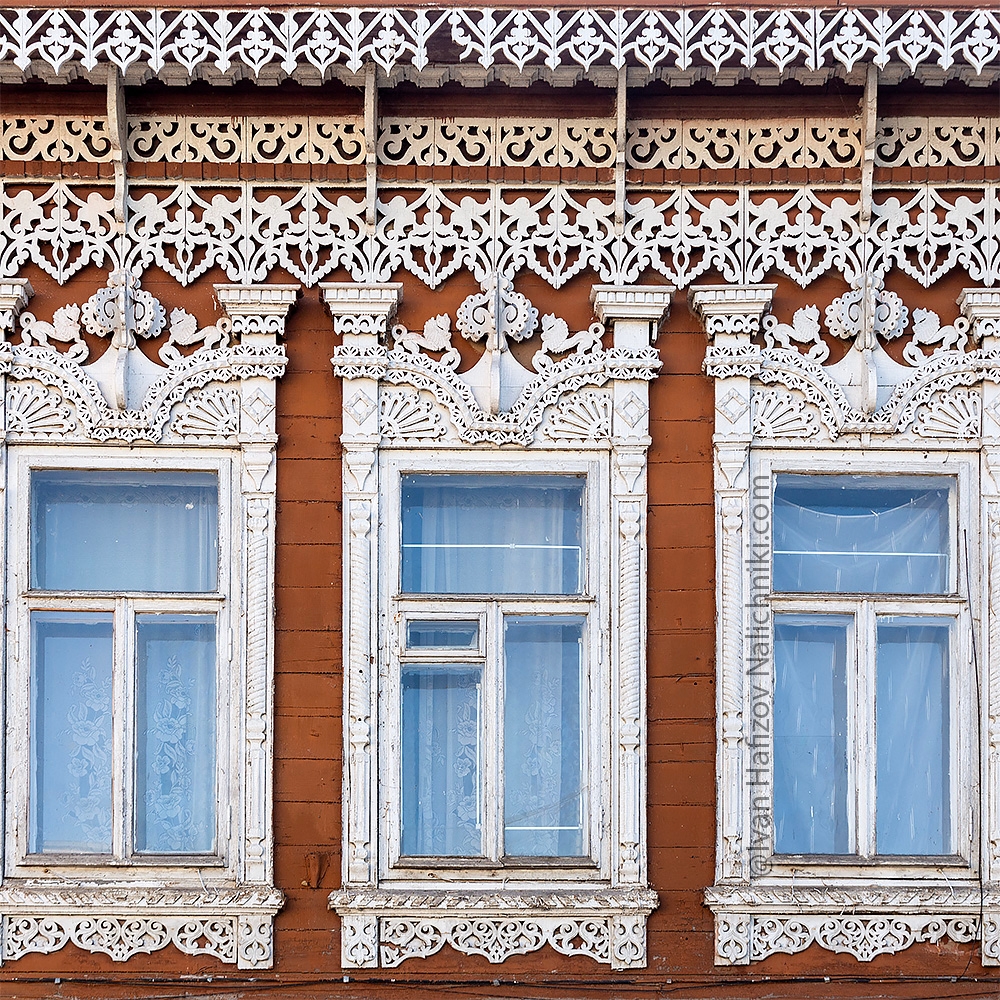
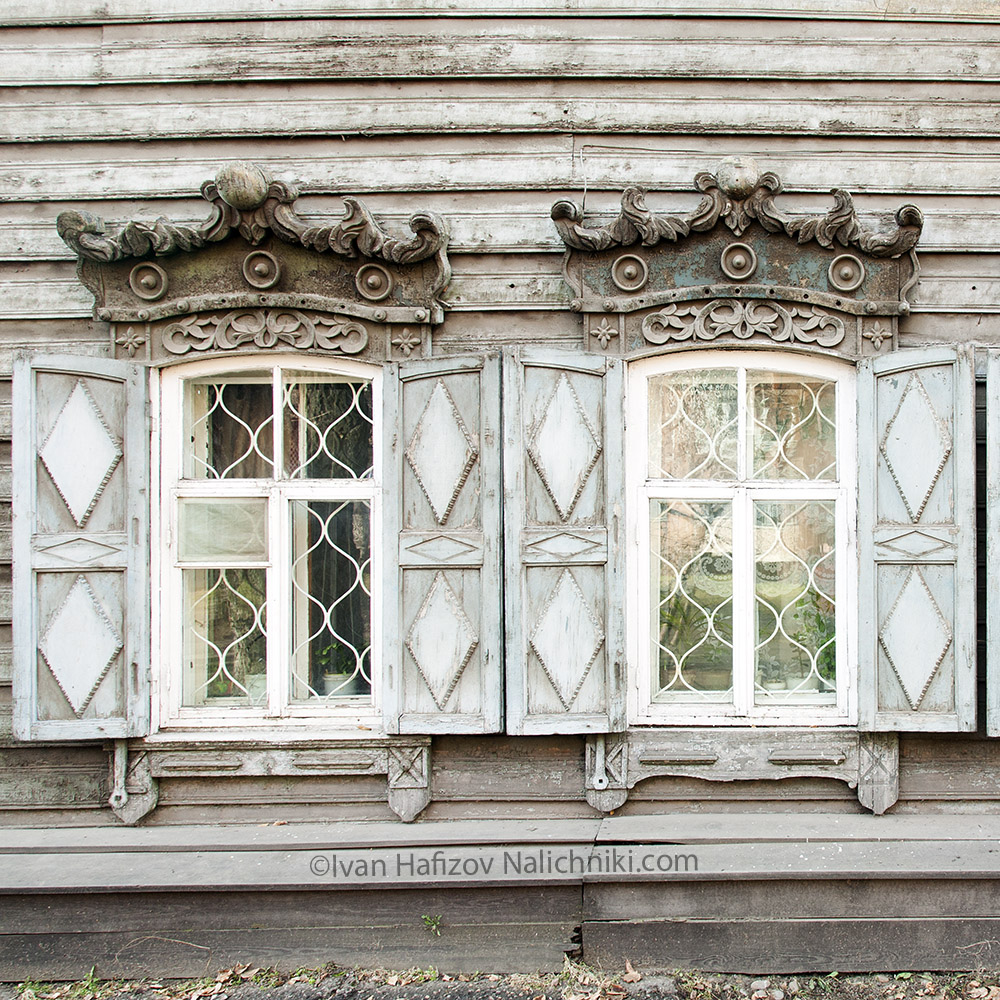
PS The photograph is of a porch and little window from the terem in Pogoryolovo, Kostroma Oblast. As a symbol of beauty lost in the woods.



35 comments
Пожалуйста!
Тут иначе-то, по-моему, и не скажешь)
Но всё же сначала выйдет новый календарь, а книга потом.