— ...I'll start from the beginning regardless, because without the beginning it's hard to follow even a simple joke, let alone a story like this one!
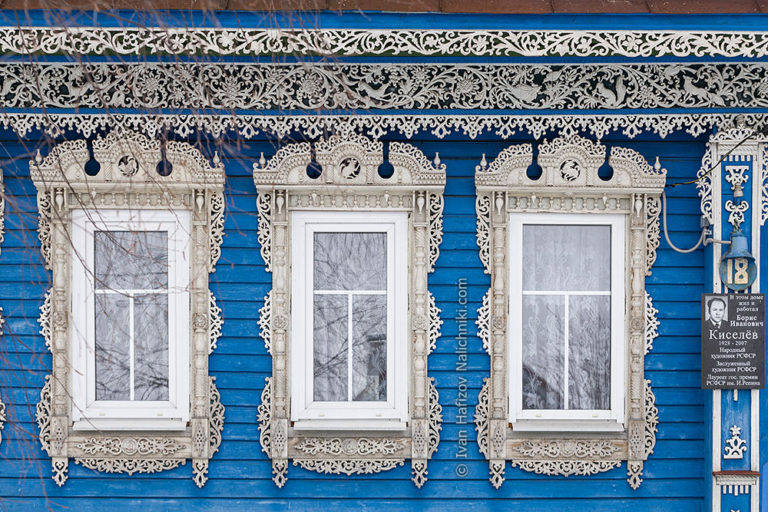
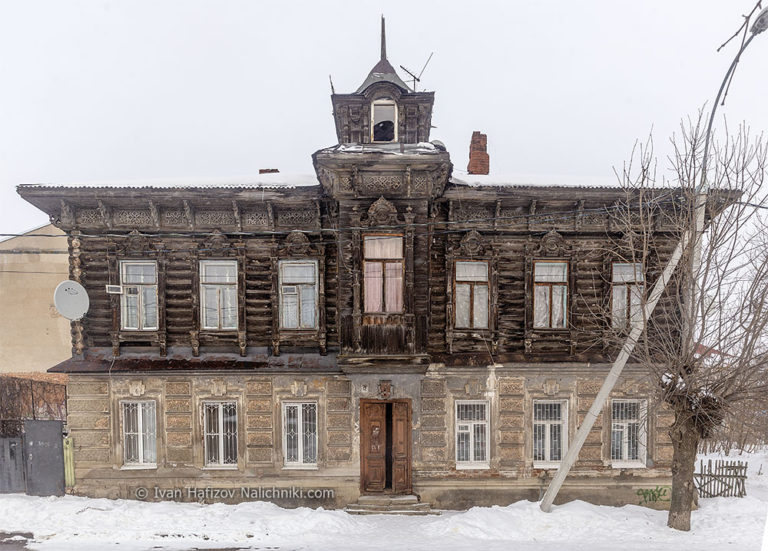
We — myself and about twenty others who've come to Yuzha with the GlukhomaGo project — are approaching the magnificent — there's really no other word — building of the local estate. This hour is technically mine, and by rights I should be talking about the town's wooden architecture, of which a few hundred — maybe even a thousand — nalichniki have survived here, from all different eras... But how could you resist when Vladimir takes the floor — Vladimir, a native of Yuzha and the founder of the Russian Dacha guesthouse that's put us up this time? "I'll get to the nalichniki," I tell myself, and like everyone else, I become all ears.
— ...So what I want to say is: this estate was built by one of the sons of the founding dynasty — Asigkrit Yakovlevich Balin, built specifically by Vladimir Asigkritovich Balin. (To the ear it comes out as "Asikrit Yakovlich" and "Vladimir Asikritych" — I'd later be quite surprised to find the correct spellings of their names.) His grandfather, Ivan Stepanovich, was a serf, but he himself grew enormously wealthy — this family was, shall we say, on the list of Russia's richest surnames. What's interesting — Vladimir pauses meaningfully, scanning us with a sly look — what's interesting is that Asigkrit Yakovlevich had fourteen children in his first marriage, and another eighteen in his second.
While we all absorb these numbers — impossible by today's standards — he continues:
— Now, having naturally grown rich... Asigkrit Yakovlevich, incidentally, was quite original for his time: he built dormitories for the workers here (they were called barracks back then), and made them an underground passage to the factory buildings, so that in bad weather they wouldn't have to go outside and nobody would catch cold. And he introduced another innovation: he paid Easter dividends to all the workers... So having built out not just this factory, but three more (two of them near Moscow), they all eventually moved away... Where to? — Vladimir sweeps us with his gaze, apparently expecting an answer.
— To Yuzha? — I suggest hopefully.
— To Moscow! — the less disconnected-from-reality tourists shout over me.
— Of course, — he nods — of course, to Moscow. Their Moscow mansions, incidentally, now house the Turkish and Hungarian embassies.
As we talk, we draw closer to the estate and everyone's eyes are drawn to it regardless.
This time I don't have my camera, since I'd been here six months before, in summer (when I took all these photographs). But seeing it a second time, it's no less stunning. Enormous, massive... And the carving here is as heavy as it is airy — that kind of balance is rare and worth a great deal...
Vladimir meanwhile continues: — Well, since everyone had moved to Moscow, one of the sons had to stay and look after the estate. That role fell to Vladimir Asigkritovich Balin. And here’s the thing — just last night, literally, I was finishing a book, and in it there’s a photograph: against this very facade — he points to the space between the large windows and today’s playground — closer to the center, three riders. A father in a hat — a serious, imposing man on a black stallion. And beside him, on somewhat more modest horses, two more riders: a yunker — yes, in military dress, clearly a cadet from some military school — and a daughter in a Circassian coat. A beauty! In a white papakha, with these things… — Vladimir runs his hand left and right across his chest, meaning the gazyr cartridge loops, one imagines. — Off for a hunt! I thought: What an extraordinary thing! A hundred years have gone by, and from the photograph it looks like yesterday! This manor house — all of it somehow alive, you can picture it all so clearly!…
We all gaze at the spot he indicated, and can easily picture the horses and the beautiful girl in her Circassian coat…
The kindergarten gates are locked today, though, so there’s no getting to the facade from the right side — and so under Vladimir’s narration we can only circle the estate from the rear.
Vladimir goes on:
— Well, since everyone had moved to Moscow... — he gathers our attention again — As befits the new Russians of the time: houses in Moscow, estates outside Moscow... Vladimir Asigkritovich did everything here: the house in Yuzha, the estate in Preobrazhensky! All in the neo-Russian style — you can see, yes? The nalichniki are classic neo-Russian style, you know it? Or pseudo-Russian. It's a style that imitates 17th-century Rus, reworked... Well, essentially it's the Abramtsevo school. So if Abramtsevo means anything to you, this is it... All of it is, so to speak, à la Rus. Very striking to look at. I'd call it a Russian branch of Russian Art Nouveau... Now, Vladimir Asigkritovich builds this house, and the design was made by his friend, so to speak, Zimin — they'd studied together at the commercial school. A fairly well-known architect, but at the time when he did this project, he was just starting out. Later of course in all the Soviet catalogs...
Here Vladimir pauses, drawing our attention to a house with blue nalichniki that has recently dressed itself up in a fresh-wood orange extension.
— That, incidentally, was the servants' house. It's been modified of course, but the nalichniki are still the old ones. The main house has a T-shaped floor plan. Here, you see, you've got a typical example of folk restoration: instead of raising the rotted logs, they tore them out and filled in brick... Yes... That's a pretty standard approach around here... This appendix — going around the estate from the rear, we indeed find an unexpected structure connected by a covered passage to the main building — I'd say also somewhat modified... That was their theater. A home theater. With a stage, in fact... The building's survived well for two reasons: after nationalization in 1918, the first Soviet was located in it. Then Soviet offices, then a kindergarten. There was simply no need to change anything...
Vladimir falls quiet for a moment and we spread out — some to touch the carving, some to shoot a wide angle. But within a few minutes we're gathered again, drawn back by his voice.
— Look over there at the ruins... — a short distance away, maybe fifteen meters from the cleared plaza, wooden remains are visible under the snow — barely a year ago, those were standing walls. That was the Balins' guest house. Guests would come and they needed to be put up somewhere. Putting them in the main house where the family lived — a fairly large family, incidentally — wasn't always convenient. Even now, many new Russians have a separate guesthouse. It's practical: guests don't get underfoot, they're not a burden, and they feel free. We can't go in right now because it's ruins, but there's still a pool in there!
We all press closer, trying not to miss anything. Vladimir, who long ago seems to have grown accustomed to having every word caught by dozens of eager ears, calmly continues:
— What happened was, after the Revolution they turned this house into... — he interrupts himself, thinking. — You know, textile production carries a certain class of environmental hazard, so to speak? Meaning there's a risk of developing pulmonary disease, including tuberculosis. Consumption cut through all textile factories — you probably know this, it was very widespread here too. So they turned this guest house into a TB sanatorium and then... — he pauses again, returning to his thread — the pool: what to do with the pool? They took it and sealed it under new floors. And then they forgot about it. Completely forgot. Well, seventy years of Soviet power — that's three generations! Then when in the nineties people started pulling the place apart — looting, you know: ripping out floors, stripping the roof, vandalizing as it were... They pried up the floors and found — a pool! And here's what's interesting about the pool: we look at IKEA tableware today, right? Nice design. But when you hold porcelain from the late nineteenth century, or a little spoon, any object — a lady's umbrella, a little boot, a shoe! You look at it and every object has a soul. Even a door handle — some special human aesthetic. Here when you look at this pool, you want to keep looking. You don't want to swim in it. For one thing it's oval! An oval pool creates a feeling of coziness... Like an enormous jacuzzi...
Taking advantage of a pause in the story we wade into the snowdrifts trying to find something, and of course no snow can hide a pool a meter and a half deep: its oval basin is clearly visible still behind the bushes and broken boards...
Vladimir justifies the ruins' sorry state:
— Well naturally it's been out in the open air for the past several years, but you can still see the beautiful border... and don't forget, this was only the guest house! The pool was made for the guests...
— Was there a pool for the owners too? — someone asks.
And Vladimir nods:
— There's essentially an identical pool in the main house too, in the kindergarten now. But it's also somewhere under the floors. In better shape of course, since the building is still in use. But the kindergarten has no money at all — you know what they say there: "The funding for the building is the same, even though one building is five years old and another is a hundred."