
Novozybkov and Zlynka — where I'd just come from — are Old Believer country. Fleeing the persecution that followed the Church Schism of 1666, the Old Believers tried to settle as far from the main roads as possible and ended up in what is now Bryansk Oblast, deep in the swamps. The carving there, as you might expect, is extraordinary.
But I'd also been in another Old Believer region: Buryatia — specifically the villages of Desyatnikovo and Tarbagatai. Old Believers who had escaped to Poland and been recaptured were exiled there, to territories the local population had no use for. The woodwork of those places is a whole other chapter in Russian architecture.
The third region is the Guslitsa — I often say "Gzhel" because it sticks and everyone knows Gzhel, but the area is properly called the Guslitsa. There too the Old Believers hid in forests and swamps. And there too, the carving is remarkable.
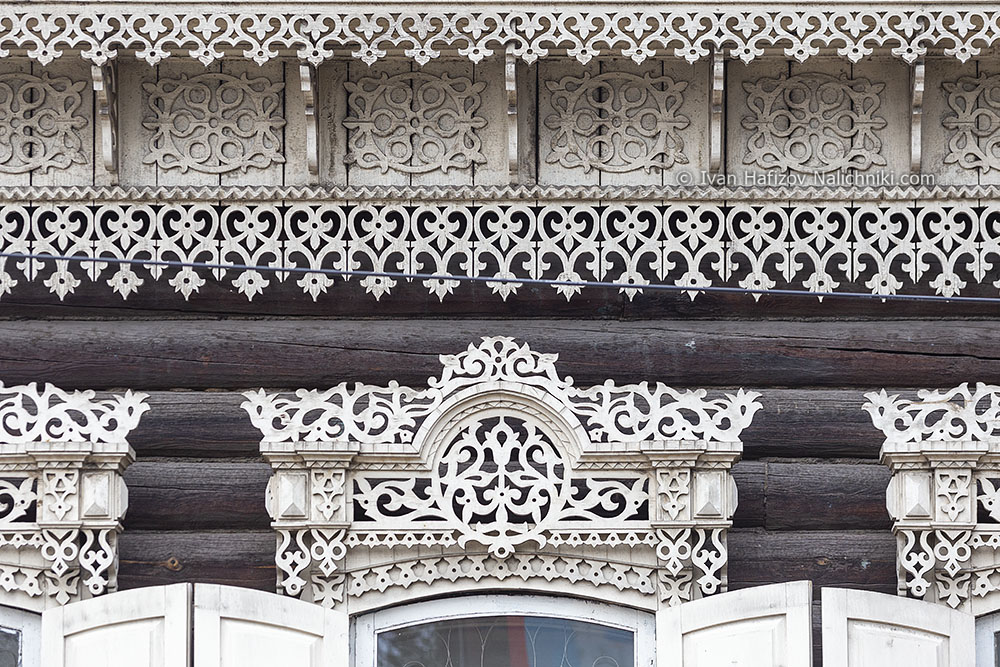
Now, a question for those who know: in all three of these regions, windows with rounded tops are common. In conversation with one of the Old Believers in Zlynka, I was told flat-out that this shape is an unmistakable sign of the old faith — which was later confirmed in Moscow Oblast as well. But if we take that at face value, a significant portion of the nalichniki in Irkutsk, Ryazan, Tyumen, Perm, and dozens of other cities would have been carved by Old Believers and for Old Believers. Could an Orthodox person have installed a window like that? What do you think?
PS The photo shows the casing of an Old Believer house from Buryatia, moved to the Ethnographic Museum of Transbaikalia in the mid-20th century.
#nalichniki #UlanUde #Ethnographic_Museum_Transbaikalia #woodenarchitecture #housecarving



12 comments