

In a 1954 book, I unexpectedly found the explanation for the decline of house carving.
You might have thought the socialist system — with its harsh attitude toward individual property — was to blame. Not at all!
I'm reading "Wooden Carving of Peasant Dwellings in the Upper Volga Region" by I. M. Bibikova and N. A. Kovalchuk:
"...the heyday of blind carving, which produced works of remarkable artistic value, did not last long. The steady development of capitalist relations caused the degeneration and death of a number of fields of folk art. Crafts passed into the hands of entrepreneur-buyers; masters of decorative arts became hired workers.... Craftsmen, forced to work for poor wages under conditions of brutal exploitation, could not devote enough attention to the artistic side of their work, and folk crafts increasingly degenerated, losing the character of artistic production."
In short: the damned capitalists are to blame for everything.
It turns out to be a curious situation. We blame the Soviet Union; they blamed the capitalists. And under the tsars, apparently the main culprits were the Westernizers led by Peter the Great.
Everyone has their culprit. The nalichniki, meanwhile, keep disappearing.
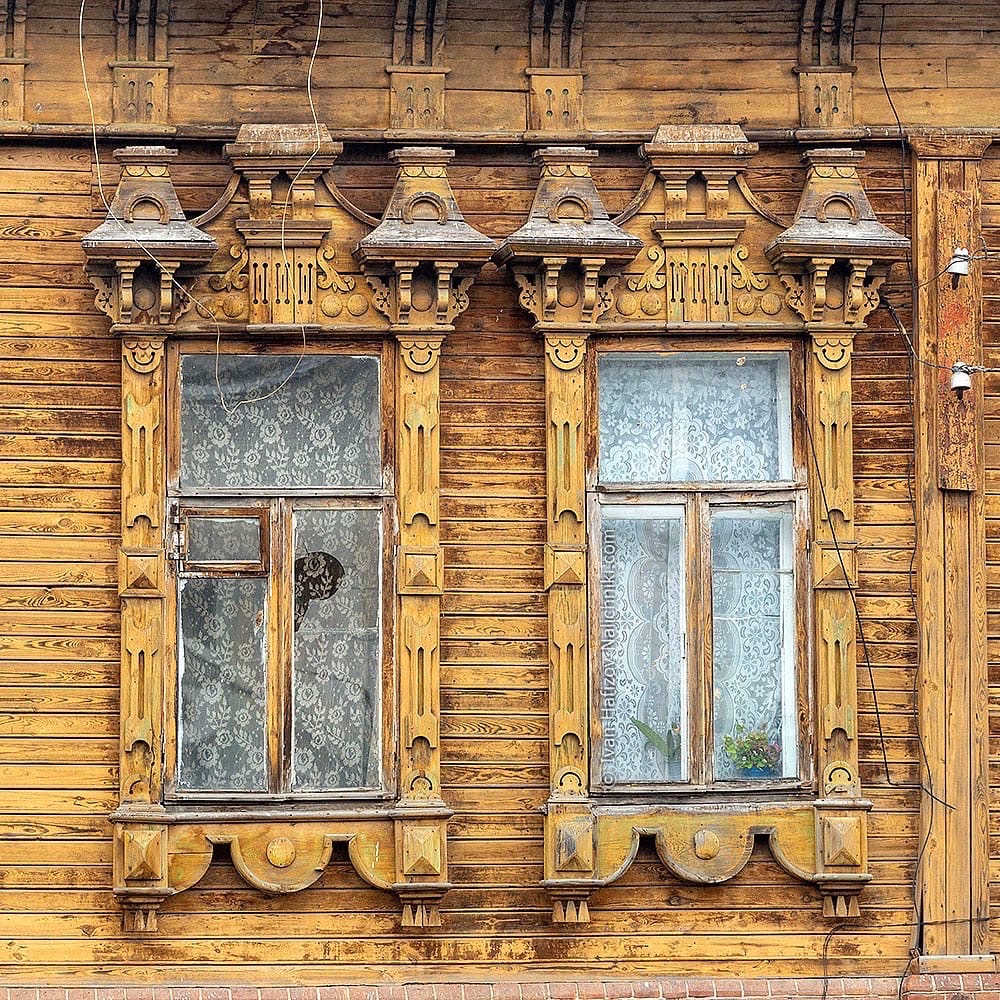
PS The nalichnik in the photo is from Pavlovo, Nizhny Novgorod Oblast. A rare example of sawn carving for Pavlovo, by the way.
PS2 This book and others on wooden architecture are listed on a dedicated page: Bibliography




25 comments
Но, касаемо упадка резьбы, он не мог не продолжиться. В условиях интенсификации сельского хозяйства и роста производительности труда, стали не нужны старые большие сёла. Теперь один тракторист работал за всё село. Дома стали пустеть, а в городе, куда крестьяне в массе переселялись, наличникам места не нашлось. Увы.
В каждой эпохе (опять же — на мой взгляд) были причины объективные — переход к массовому производству в царской России, исход населения из деревень в советское время, стремление к комфорту в наши дни.
Но были причины и субъективные, те, которые могли бы замедлить процесс: отсутствие какой- бы то ни было строгой (централизованной) политики сохранения исторического облика городов.
Причем этой политики как не было в царской России, не было и в советское время, нет и сейчас.
В этом смысле — они близки к традиционному искусству: картины маслом тоже никогда не были предметом первой (второй и третьей) необходимости, но их красота всегда была в почете.
Я траву отродясь не косил, каюсь. Надеюсь и вы лишены этой счастливой ежедневной повинности. Ведь есть гораздо более интересные дела!