

…Eleven years ago, in the distant year of 2007, when I was just beginning my nalichniki journeys, many small towns felt forgotten, as if stuck in the nineties. In Moscow and the surrounding region, by that point, shopping centers had almost completely displaced open-air markets, the pavement in most places had been replaced with something intact, and people were wearing clothes in various colors and cuts. There were still kiosks everywhere in those days, and even that seemed to me a contemporary thing (or at least to me it did).
But arriving in some Kovrov or Navashino, you felt as if you'd slipped into the past: the dominant color of clothing was gray-black-green (army padded jackets worn by both men and women); potholes and mud on the roads — impossible to jump over or go around, and the dirt so thick that clean shoes felt like unscientific fiction; shady characters hanging around the bus stations, radiating danger from a kilometer away; and the kiosk windows that had made it out there already had metal grilles on them — grilles I could no longer remember in Moscow, probably because I'd been too young to notice. Around those kiosks (which sold mainly beer and cigarettes, making it impossible to buy decent food after dark) it seemed that a substantial portion of public life was concentrated: people drank by them, sang by them, socialized by them. They also fought by them. It felt as if you removed the kiosks and the people would vanish from the streets entirely.
…
Then came several years of trips to large cities — that was the period I photographed nalichniki in Irkutsk, Omsk, Novosibirsk, Tyumen… I looked and didn't find them in Krasnodar, Voronezh and Petersburg, walked every street in search of them in Krasnoyarsk, Chelyabinsk, Kazan, Kemerovo, Yaroslavl, Tambov… Large cities are all completely different, each with its own aftertaste, and they could be compared to one another perhaps only by the level of development around the train station: in Vladimir, the square was empty and the occasional taxis dropped off passengers without particularly getting in each other's way except at peak hours; in Sergiev Posad — buses, taxis, and gypsy cabs were jumbled together in terrible chaos; in Perm, I believe, taxis had already been banned from the square: only buses turned around there; and in Chelyabinsk — the bus station had been moved off to the side, and entry to the square was paid and time-limited…
Then I dropped out of shooting for a couple of years and forgot all these reflections — only to be reminded of them now, when small towns have once again started passing before my eyes in large numbers. And the difference from ten years ago is genuinely enormous.
Of course (and unfortunately) it doesn't lie in the quality of the asphalt, or the abundance of mud on the roads, or the color preferences of local residents, who sensibly prefer practical dark tones to bright ones. The overwhelming numerical dominance of battered domestic cars — which surprised me even then, accustomed as I was to the variety of foreign models in the capital — is of course still there.
But the kiosks are gone.
Gone, those crucial gathering points that drew all the young and active inhabitants of small towns to themselves.
And now the only reminder of them are the yellow lights of streetlamps burning around the clock in the parking lots of gleaming, garish Pyaterochkas, Magnits, Diksis and Monetkas — as if beamed down here from outer space.
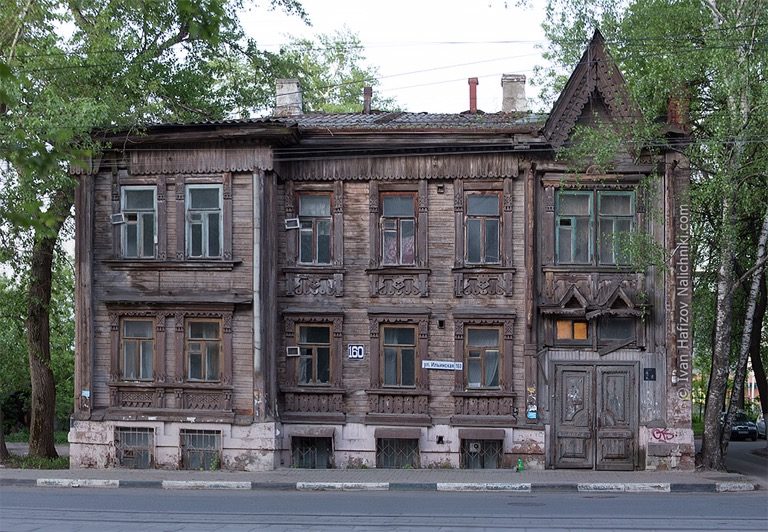
PS The photo is from Nizhny Novgorod.


3 comments