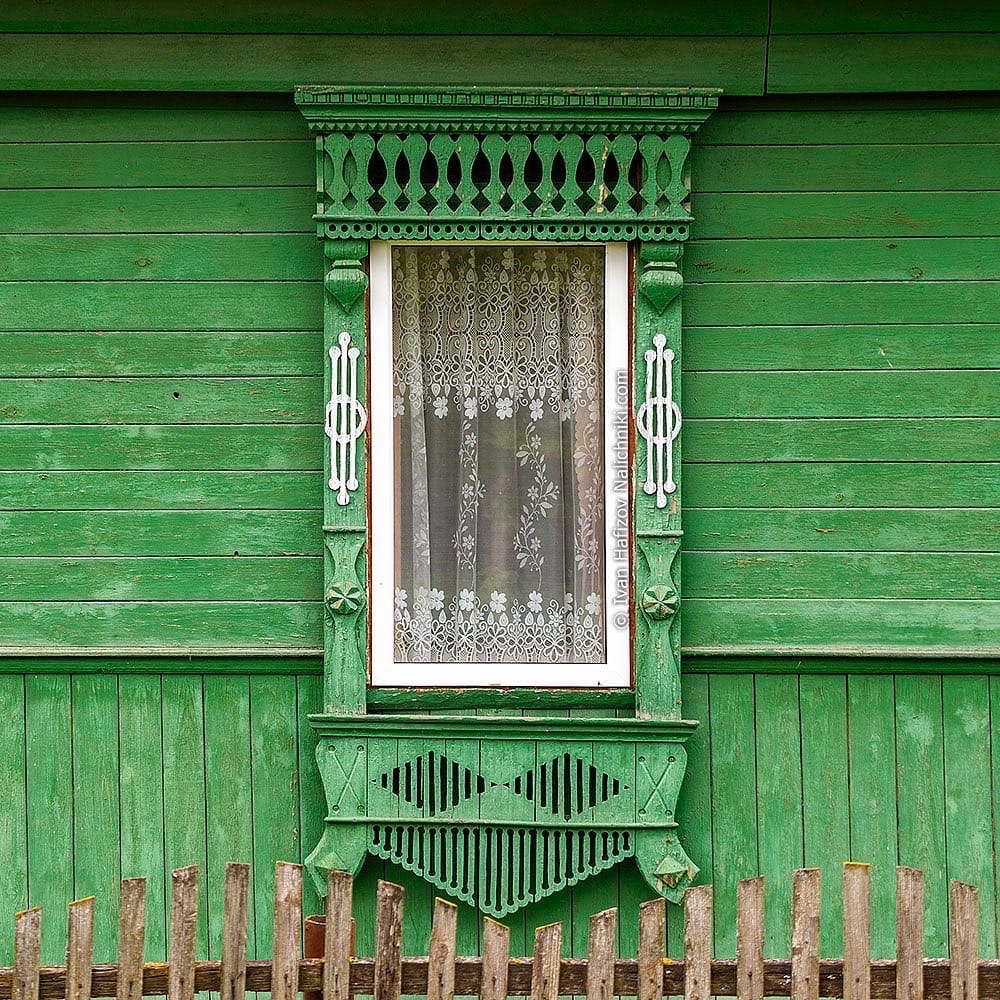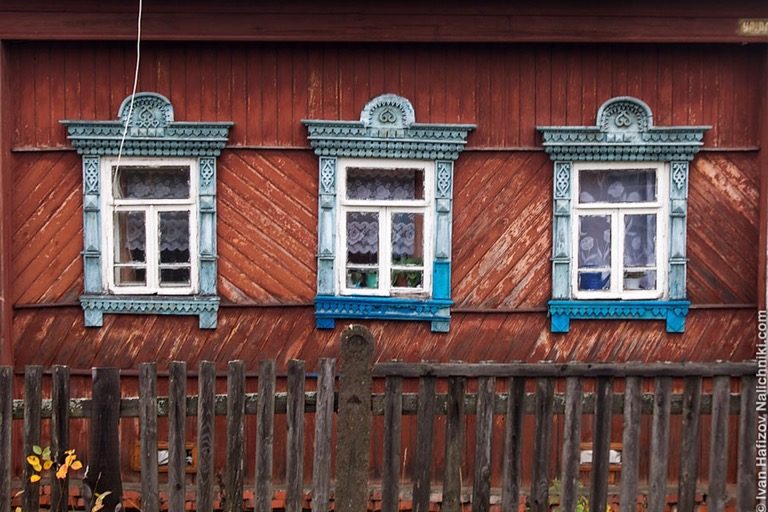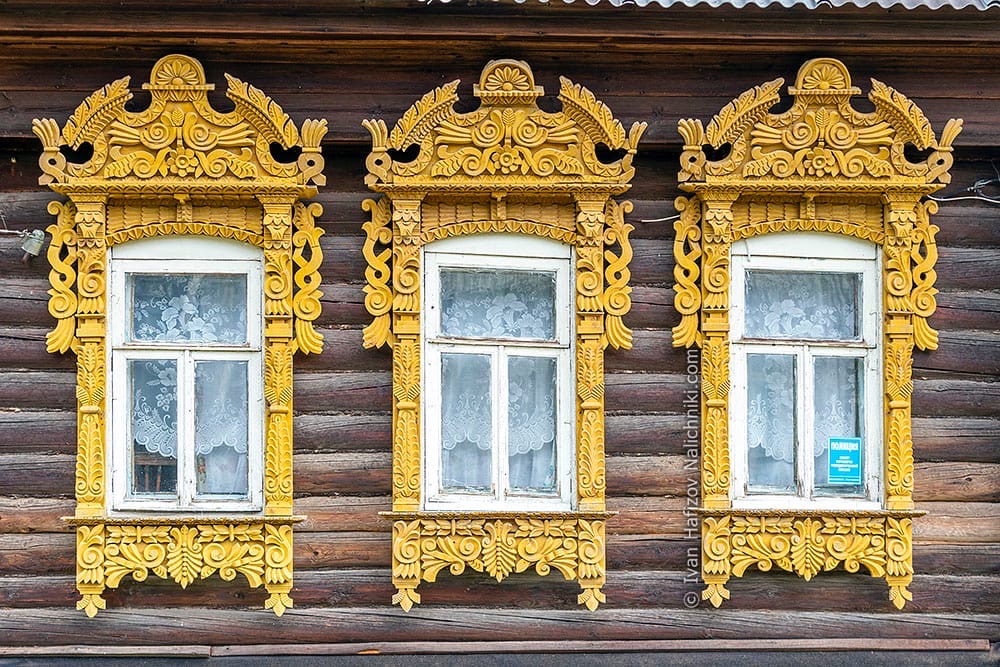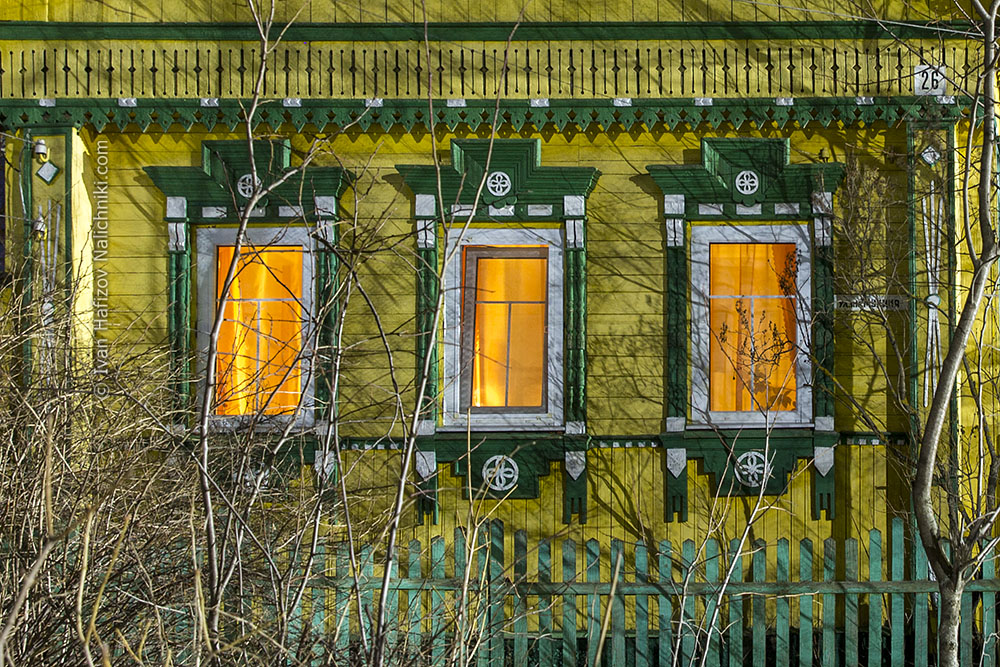
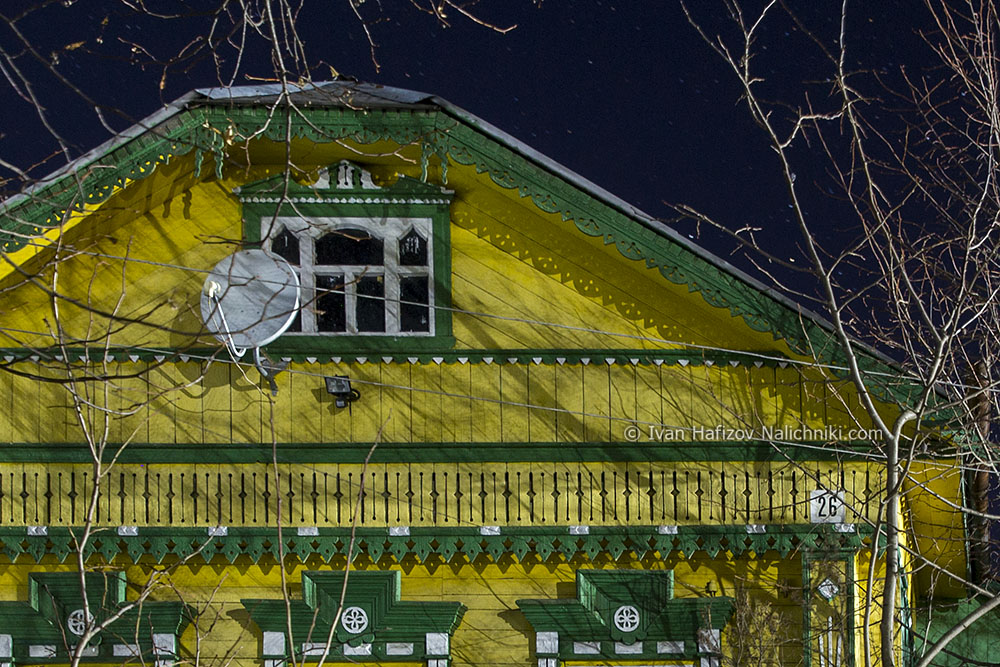
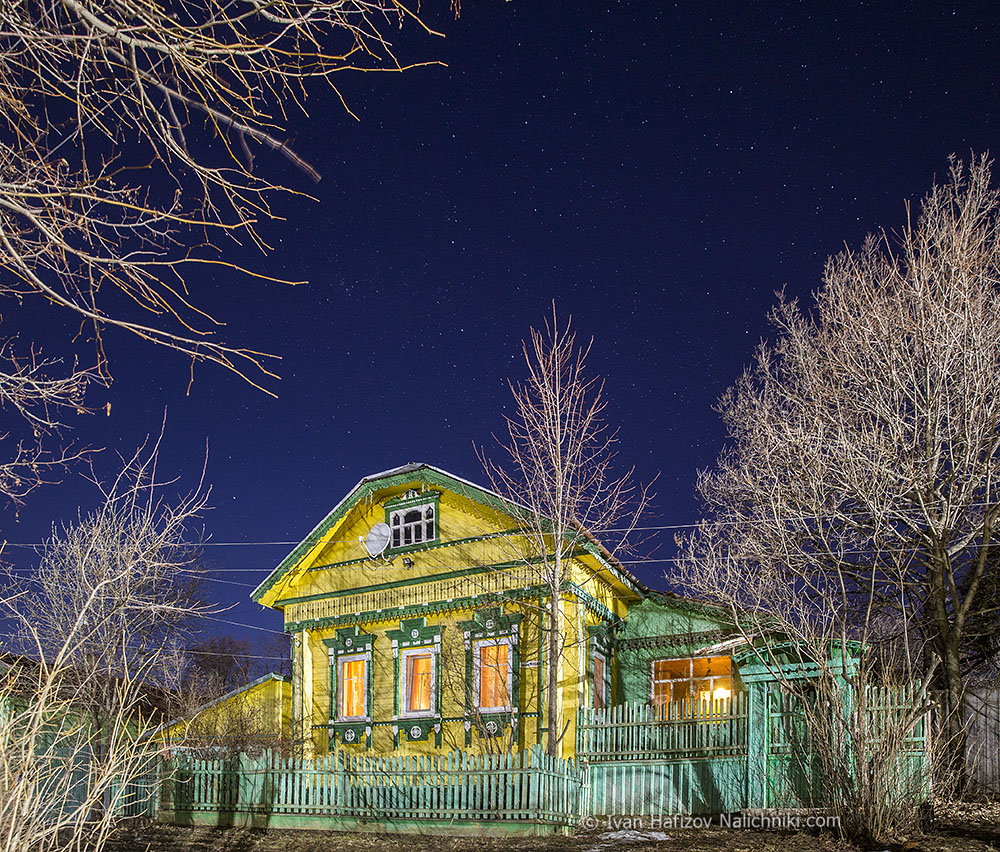
— …Oh, nalichniki! — says the man who'd come out of the gate to see what I was doing there, squinting with knowing comprehension. — That's all small stuff. Now where you'll find real nalichniki, there are plenty more of them… You need to go. I'll tell you where you need to go, write it down: Gavrilovo-Posadsky district, the village of Petrovsky, there's a Morozovo there. So you're into this, this woodwork thing, yeah?
— Oh, wait, I'll actually write that down! — I nod at his last question, not even surprised by how fast he switched to the informal "you."
While I dig out my phone, wake it up, and type "Mo-ro-zo-vo" with half-frozen fingers, the homeowner is already going on.
He speaks with a distinctive Ivanovo accent, a remarkable one that makes the very concept of "unstressed vowels" nearly meaningless — practically every vowel in his speech becomes stressed. So if you're wondering which syllable gets the stress in the city name Teykovo, don't bother guessing: all of them. That's how it is here.
So the homeowner continues: — Or Ganshino… Ganshino, Morozovo, you'll see them past the Nerl. And what got you into this topic anyway?
— Well it's interesting, — I answer on autopilot, still copying unfamiliar place names into my notebook — what makes Teykovo different from other towns. It's all history! Otherwise tourists come and what do you tell them? So I'm out looking for who the carvers were, what styles of nalichniki are still around…
— Go to Domotkanovo, my village, there's a ton of them out there!
— I haven't even finished here yet… — I smile and add to my notes.
— Oh forget it, — he cuts me off, irritated — everything here is from the fifties, all new. Fifty-four, fifty-eight… You won't find anything old. But in Domotkanovo now, there's plenty of that stuff… I've got a house out there… Now I threw out mine, of course…
— Why'd you do that? — I'm surprised: odd to hear from the same man who'd just been telling me how valuable those nalichniki were. — Well I was fixing up my mother's house, — he waves back toward the house we're standing by — gave them to the neighbor over there, see that house with the blue windows… Those are from fifty-four… But they're all the same here! It's all one style! Out in Domotkanovo they're different… Made like little wings… And in Ganshino, in those villages, the style's a bit different, kind of… Well, how do I describe it to you… — he looks around, clearly scanning the surrounding houses for nalichniki to compare with the Ganshino ones. — I have a poster! — I decide to help — Can you show me which ones it looks like?
He nods, I drop my backpack, and half a minute later we're spreading a fairly crumpled poster with about fifty photos of nalichniki from around the country on a bench.
— Like these ones in Ganshino. — almost immediately my companion puts his finger on the Kaluga ones. — Exactly like these…
— Those are Kaluga ones! — I smirk skeptically, wondering what they actually look like out there: "also white" or genuinely something similar? Unlikely, but stranger things have happened…
— In-ter-est-ing… — he draws out the syllables and looks at me with surprise — And what got you into this?
— I'm shooting for a virtual nalichnik museum. Writing a book about them!
— Okay, a book, a museum, and then where does it all go?
— Well onto the internet. Nobody knows anything about them…
— Nobody knows a damn thing. That's what I was going to say… — and suddenly without a breath — What's your name? — he extends his hand again, like at the start.
— Ivan.
— I'm Volodya.
We shake hands again, and I notice how wide and dry his palm is, how firm his grip. — I just remembered, — he continues — out there in Ganshino there was this one man… The reason I keep coming back to Ganshino… We were building a house out there, one project, and we were walking around — you know what year the houses there date from? Short version: the Petrine era!
— Three hundred years? — I boggle.
— Yes! — he nods — The Petrine era. The old Yaroslavl highway went through there, the one that runs behind Suzdal. And it wasn't on this side of the Nerl, it was on the other. So it ran… You cross over the dam… It's not far, 25-30 kilometers. Did you come from the Suzdal side?
— I came from Kolchugino I think.
— Ah! Right, that road! That's the old one…
— They scared me off, — I laugh — said don't go into the village, don't go in the forest: missile troops all around!
— They're everywhere here! — he snorts. — You drive out now, twenty kilometers, they've got exercises again right now, Yarses parked out there. You know how we live here: they block the road — that's it, that's the end, we don't go anywhere. We sit.
— And there's only one road out? You can't even leave town?
— They shut down the whole region. Bam, it's closed and that's it, you're going nowhere. Only an ambulance or to the cemetery. But it usually doesn't last long: three days, sometimes four.
I try to figure out what I'll do if this "bam" happens right now, but Volodya doesn't give me time to think:
— You buy local souvenirs yet?
— No, I just drove into town basically. But what do they have here anyway?
— Are you serious! — he ignores my question — Go to any mall, buy yourself a Yars or a Topol! They've got these little models: "Teykovo-Yars"! Where else are you going to find one? Those things that roll down Moscow in the parade — that same contraption drives down this very street, fifty meters from here. Now when you cross the river there'll be a shopping center, go up to the second floor, there'll be a stall on the left… On the right! Coming back it's on the left, going in… Look, you don't understand! My relatives come visit, I take everyone out here… There's a guy who works there, just as deep into it as you, into tourist souvenirs. You know, for all this stuff. He sells those little models there. You can have a talk with him. Go on, go, you'll still make it before lunch!