…So you travel around, studying the country… that's a fine thing! I did my share of traveling around this vast land too, back in the day — only that was still during the Soviet era… So there's this one episode I'll tell you about — it was back in eighty… wait, no. Seventy-two. That's right. And I was about your age then. How old are you, anyway?
— Thirty-five, — I answer.
We're sitting in Orekhovo-Zuevo, Moscow Oblast, on a wide unpainted bench with our backs to a brick-faced house whose nalichniki, according to its owner, have been gone for thirty years now.
— Oh, I was twenty-five then. Doesn't matter, still young. But I was important — they'd sent me to inspect a school! My very first inspection — I remember it like yesterday. Checking math teachers, how they run their classes. So I arrive… The school was on the outskirts, plus Kazakhstan — and the republics always had trouble with education. I arrive: the kids are eyeing me warily, the teachers are scared to say a word, but we'd already been warned: "To them, you're people from Moscow. Important people!" Never mind that I'm twenty-five and the teacher's sixty. Didn't matter. So on the second lesson I walk in. A situation. The topic: adding fractions. You remember how fractions add up?
— I studied to be a mathematician! — I laugh, while frantically trying to recall — I think first you bring them to a common denominator, then just add — but I'm not entirely sure…
— Oh right, you mentioned that. — my companion waves away the excuse. — Yeah. So anyway. Point is, a student comes to the board… You understand, when an inspector visits a school, word goes out: only the best students go to the board, the rest keep quiet and can stay home entirely if they want! We know that, they know that, we'd been warned ahead of time. So anyway… The best student, probably, comes up to the board in front of the whole class and adds fractions: numerator with numerator, denominator with denominator. My eyes practically pop out of my head, and the teacher — that very teacher who's sixty (he's been at this school for forty years, by the way) — tells the boy: "Excellent, well done!" and sends him back to his seat. Then calls up a second student and the whole thing plays out again. So they all — you understand, every last one of them — did it that way.
The man draws a couple of fractions in the sand with a stick and, adding 1/2 + 1/2, arrives by this elegant method at 2/4, which he then reduces to 1/2.
— Brilliant! — I exclaim, laughing.
— Well, I mean… — he laughs and tosses the stick aside — you could say that. I barely held myself back from standing up right there in the middle of class and starting to "teach" them myself. Something stopped me. Kept my composure, sat it out. They all do it that way, you see. And nobody found it strange in the least. I mean, seems like if you add a half plus a half, or a quarter plus a quarter — think it through a little… They were adding mechanically, that's the thing. Yeah. So, anyway. After the lesson we sit down together, the teacher and I… Well, I can't lose face either — I'm an authority, remember. So I work it in casually, in the middle of going over the organizational details: "The kids made a little mistake there, when they were adding the fractions. You probably didn't catch it. They had it like this and this, but it should be like this and this." And I sketch an example from the lesson on a piece of paper. Didn't make a big deal of it… He clarified something about the lesson and we moved on… Yeah… He didn't even question me on that example at all, I think — brought up something else… Yeah. So, next day I come in… Oh — I forgot: at the very beginning, when I'd just arrived — I'm sitting in on classes, and the fifth-graders are curious, who's this, what's going on… He introduced me, naturally, as a specialist from the Ministry of Education. Right. So. Next day. Math starts in the same class. And this teacher — now this is what forty years in the classroom does for you! — steps out before the students, takes an example from the homework, adds the fractions on the board correctly, the way I'd shown him the day before, and says: "Children, as you know, we recently had a visitor from Moscow. Moscow has always been at the cutting edge of world science and culture. And here we are, together with Moscow, also reaching toward new knowledge. So then, children — fractions are now added like this!" And in two minutes flat he'd explained the whole "new method" to them!
— And the kids?!
— What about them? By the next lesson they were cracking them like nuts. Who knows what they'll dream up in Moscow next!
…
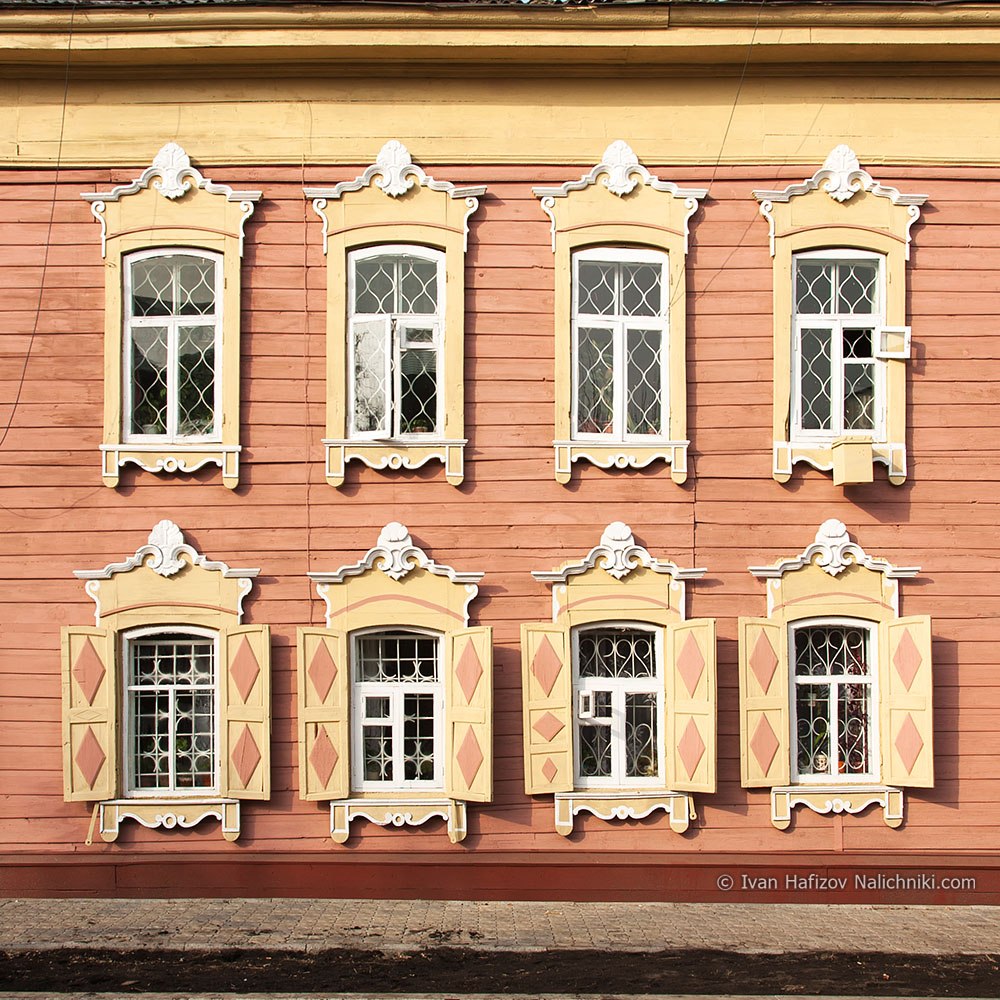
PS The photographs show the house of Stepan Nikiforovich Sveshnikov, director of the board of the Vikula Morozov & Sons Manufactory Company, built in Orekhovo-Zuevo in the late 19th century.