There are days when much doesn't go the way you'd like. Today is one of those for me. But besides the dull and uninteresting, there are truly pleasant events. The portal

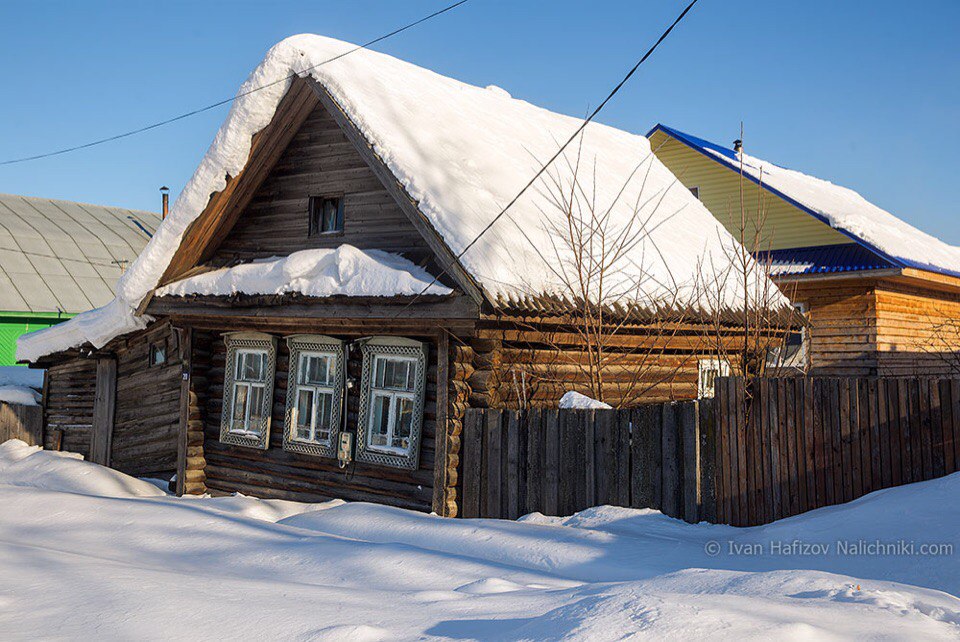
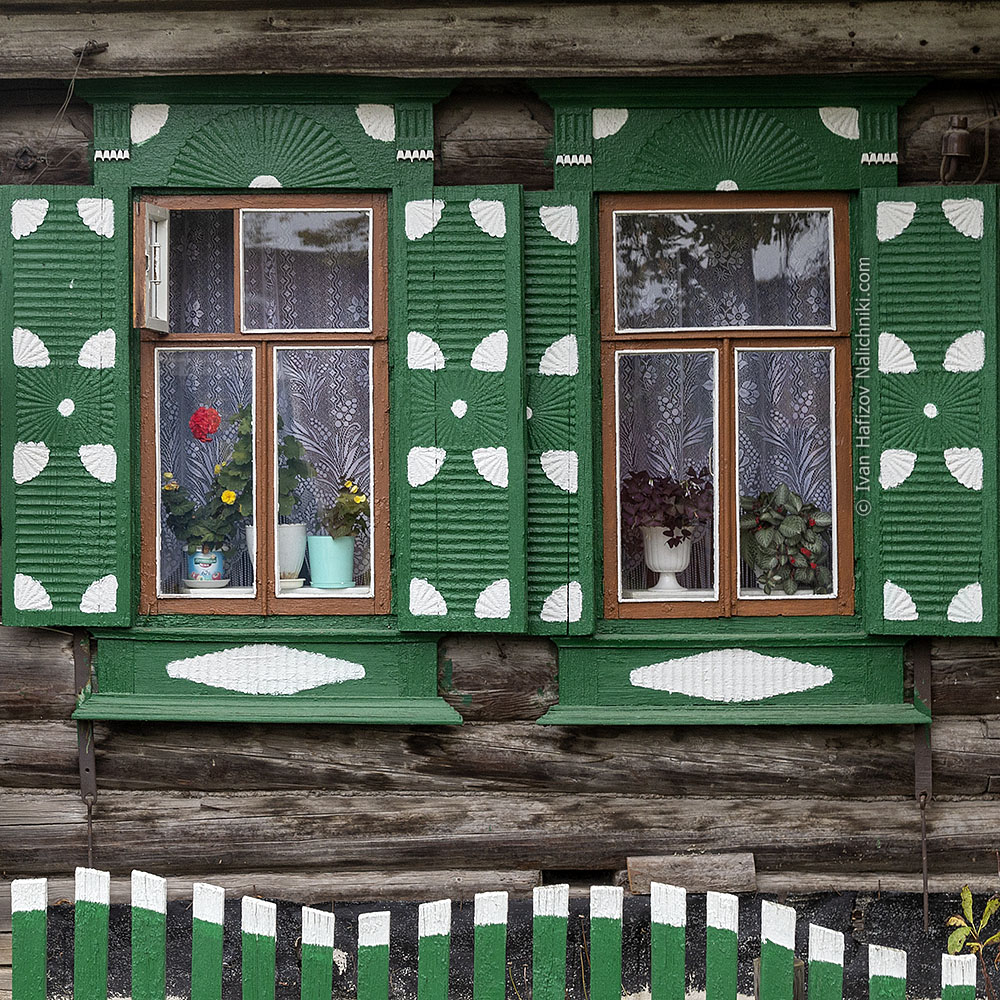
Successful Moscow wedding and interior photographer Ivan Khafizov has one truly remarkable hobby — he travels all over Russia photographing carved window nalichniki: began for himself, continues for history; the collection holds several thousand photographs. The Kirillitsa correspondent spoke with Ivan about the particulars and goals of his work, his travels, and the appearance of the Russian provinces.

Kirillitsa: Ivan, even a quick look at your LiveJournal or website is enough to guess that nalichniki entered your life not by accident — otherwise you wouldn't have accumulated a many-thousand collection of photographs from more than 70 Russian cities. From your interviews we know that your first photographs of nalichniki were taken in 2006 in Engels. From all appearances the shoot was unplanned, and at the time you had no plans to create an encyclopedia of Russian nalichniki. What became the catalyst for this coincidence growing into such a grand project? What made you keep going?

Ivan Khafizov: Yes, indeed — I photographed my first nalichniki in Engels, Saratov Oblast. And now looking at them I'm struck by the fact that they interested me at all — there are very few nalichniki simpler than those of Engels in our country. (Getting slightly ahead of myself — over time the idea arose to rank all nalichniki by a complexity coefficient, a combination of carving difficulty, paintwork, and assembly. The Engels nalichniki got a score of 2 on this scale — and even that only because a few use relief carving. Most are quite simple.) The one thing they stand out in is color. It was precisely as colored objects that I began photographing them (I believe the first mosaics I posted were even called "Colored Windows of the City of Engels"). The idea of photographing nalichniki really did grow from a poster of Dublin doors I once came across online — 32 doors in four rows of eight. So when I noticed the nalichniki were colorful, I simply had the idea to collect them into a similar mosaic and that was that. No encyclopedia was even mentioned. I didn't even imagine that nalichniki in another city would differ from those of Engels. I photographed about 150 of them — to have something to choose from — assembled them into a mosaic, and stopped thinking about them.

By the way, I assembled them into the same kind of mosaic as I still use to unite nalichniki from one city — an 8×4 mosaic, which makes looking at nalichniki from different cities meaningful and allows you to compare and see how different they are in different regions. What you call the catalyst was, I think, a chain of coincidences. First, a bicycle trip with friends on the route Rostov-Borisoglebsky-Myshkin — less than a month after Engels. Second, several more business trips in half a year to different regions of the country — to Chuvashia, Mordovia, and Chelyabinsk Oblast — two-week trips, including weekends. I tell the story now and envy myself. Of course those weekends couldn't be called rest — I got up much earlier than for work and sometimes walked 25 to 30 kilometers a day. Then came back late in the evening and uploaded, as I well remember, those gigabytes of photographs via USB 1.0. (Everything is faster now — the photos have only doubled in size since then, but the upload speed has increased tenfold at least.) So — driven I think by purely collector's instinct rather than any enlightening or even research goals — I shot some twenty cities in a couple of years. So perhaps one could say that this coincidence grew into a pattern thanks to a passion for collecting. I love collecting things in general. I bring buttons home that I find on streets, carry sugar packets from around the world. For a while I started photographing manhole covers, but somehow lost interest.

Of course, after it became clear that nalichniki differ not only in color but in the presence of shutters, the type of carving, the number of paint colors, and countless other parameters, photographing became far more interesting. Processing the photographs at home became more interesting too — looking at them and finding common features in the carving of different cities or different neighborhoods within one city. I read everything I could find about nalichniki at the time — and there was very little: most analysis concerning nalichniki and types of carving came down to a detailed study of the Yaroslavl school of carving, a mention of the Tomsk one, a glancing touch on the Volga region and Vologda. That was all. I was lucky again here — by the time I was reading all this, it was already clear that the authors were relying only on the most researched regions. But what about the other places? Surely there was something? It was hard to believe otherwise. So at some point collecting became research. As for history — certain stories stay with you — like the story of the house of one of the governors-general of Voronezh, in which he himself lived in the 1880s, in which his wife later lived, and in which his descendants live to this day. The mind boggles — how did they manage it?! On the street where that house stands, only four or six pre-war houses survived — all the others burned, but those few made it through.

Or there was a house — in Kostroma I think — that was being repaired when I was there. It looked like there were new logs. We got talking with the owners — and it turned out the logs were at least 130 years old — inside the house, under the ceiling, a copper plaque had been nailed up — a kind of insurance policy — from the Russian Insurance Society, dated (if I'm not mistaken now) 1888. Meanwhile the house was like new, and the new owners had no intention of removing the nalichniki — they'd sanded them down and hung them back up. But that's houses and their stories. With people it's rather different. The thing is, I haven't yet been given a single carver's name. What's more — I don't think there will be any. Because nalichniki are a folk element of architecture. Not in the sense of unimportant, as the word is often used nowadays, but in the sense of people's. Nalichniki weren't made by some particular craftsman for the whole neighborhood. Very often each person made them for themselves, for their own house. But made them, as a rule, with an eye on their neighbors — not inventing new elements and combinations, but generally combining those already developed in that city or village. This is why the nalichniki of each city differ from others. This is why within a city they resemble each other despite age differences sometimes reaching a hundred years. And this is why in the pages of a "nalichnik guide" or "encyclopedia" — there will most likely be no carvers' names. And incidentally this is precisely what makes the nalichnik phenomenon unique — its people's nature. They weren't carved by architects from templates. They are the embodiment of the harmony of several generations of the people themselves. Of us, that is.

Ivan Khafizov: At first I wanted to say there can simply be no universal and easy way of knowing whether there are interesting nalichniki in some city. Then I thought — actually of course there is and we all use it. And this method is directly connected to how nalichniki spread through the world. Wooden nalichniki are a remarkable thing. They exist in Chuvashia, Mordovia, Yaroslavl and Ivanovo Oblasts. In Tatarstan, Buryatia, Bashkiria, Bashkortostan. In Karelia, Krasnoyarsk Krai, Transbaikal, and Belarus. In Moscow and Moscow Oblast of course. The only thing that comes to mind as common to all these regions is the Russian language. I think I won't be wrong in suggesting that it wasn't without the language's help that carved nalichniki spread through the cities (and countries). So the first thing I do is listen to what people say. Where they advise going. In Ivanovo they say — go to Kineshma, the nalichniki there are incredible. You get to Kineshma and they say — the Shuya ones are better, what do we have here? You get to Shuya and they say — Vichuga is where the beautiful nalichniki are from. And in Vichuga they send you back to Ivanovo. Or back to Shuya — it's the most beautiful! But that's once you've already arrived in the region. When you've already come to the oblast. That's how from Cheboksary I went to Kugesi. Kugesi is a settlement near Cheboksary, quite small, but very distinctive, and the nalichniki there, while obviously related to those of Cheboksary, have their own distinguishing features. Similarly, from Voronezh I went to Bobrov, and from there to Michurinsk — everyone spoke very highly of it.

But all that was at the beginning — when it wasn't yet clear where things were leading: you kept your ear to the ground and tried to understand where the more interesting ones were. That's where you went. Now the fourth targeted expedition for nalichniki is being prepared. The pilot was the "South-Western" one — through Moscow and Kaluga Oblasts. Back then we failed to account for many things... The second was to Ivanovo Oblast, and the third to Ryazan. Over the past couple of years roughly the following search strategy has developed. First — I look at the list of historical cities of Russia. Not the one approved in 2010 (only 41 cities) — but the previous one from 2002: 478 cities. In broad terms — that's target number one. Though the list includes cities where nalichniki no longer exist (like Pereslavl-Zalessky) and some where they probably never were (generally southern cities, like Maikop or Krasnodar). So in the end not so many remain. And onto this skeleton are layered the additional settlements and villages that locals mention. There are actually far more of those than there are cities, but I don't aim to visit them all — only the most interesting, those the locals recommend. There's one more factor influencing the choice of where to go. It can be briefly described as a "tendency toward district centers." That is, all else being equal, I'll first prefer to go to Krasnoyarsk, then to Alapayevsk. First to Ryazan, then to Spas-Klepiki and Gus-Zhelezny. First to Kazan, then to Yelabuga, Mamadysh, and Tetyushi. Such a sequence, at first glance, seems illogical — smaller towns have preserved far more wooden houses and the nalichniki there are more likely to be authentic. But on the other hand — large cities develop far faster. Construction there goes "in step with the times" — meaning "raze to the ground and then rebuild" — nothing new there. While in small towns everything is slower, calmer. Returning to Kovrov in a couple of years, I'll likely find it much as it is now. But in Vladimir all the wooden buildings could easily be demolished.

Kirillitsa: You travel a lot through our country. Do you manage to notice features characteristic of the nalichniki of different Russian regions? Ivan Khafizov: I try. At first it seemed it would be enough to understand — here they have shutters, there they don't. I generally hadn't expected us to have so many surviving wooden buildings. Then came the understanding that (a) this wasn't enough; (b) the reasons for the appearance of shutters are completely different; (c) the time of the appearance of shutters is completely different. The same goes for all the other elements. In Saratov Oblast, on the Volga bank — shutters were made to keep out the bright and hot sun; in Chita, in Transbaikal — to keep out the strong wind; in Arkhangelsk Oblast and Karelia — to be able to sleep normally during the polar day. And all this goes back a long way. And somewhere else shutters appeared only in the late 19th century — to keep out troublemakers. So the reasons are different, yet the result is the same. The same goes for the nalichniki themselves. If all the nalichniki in a city are painted white, then first it may be because the city simply has a paint-and-lacquer factory. And this is already inseparable from tradition — any unpainted or greenish nalichnik will be completely alien-looking, even if it's in essence a copy of the local ones.

I was told about Michurinsk — where most houses are painted green — that the reason is that for a time (I might guess in the 1990s) the city had only one place with jobs — the railway. So locals carried home buckets of railway paint. And what the houses looked like before that? Who knows now. The whole amusement of collecting such "reasons" is that you can never verify their authenticity. People tell them because "Gena told me..." — so essentially they're more like tall tales than truth. Though in some of them there's truth, I hope. As for features unique to different cities — for the last few cities I've been prefacing the nalichniki with a small image showing exactly the detail in the nalichnik's decoration that serves as that city's calling card. In words it's almost impossible to describe. For instance Michurinsk — white and lacework, and Izhevsk — white and lacework too. But the lacework is completely different — any child can tell one window from the other. It's simpler and more correct, I think, to show a picture of one of the elements, and the viewer will find the rest themselves. Maybe find something I didn't notice.

Right now I want to make a few coloring pages featuring nalichniki — one window from each city. For children. In the cities you can't see nalichniki, but children subconsciously reach for the beautiful, the traditional, the native. In Krasnoyarsk on City Day they put up a two-by-two meter banner in the street, filled with small windows. And beside it a person with markers. The wanting-to-color a nalichnik with shutters (Krasnoyarsk has shutters too) was endless! In two hours the empty windows were all filled! So I hope the coloring pages will be popular. Especially since they'll be available for download completely free of charge. Maybe then the growing generation will develop an interest in Russian nalichniki. And maybe someone will decide to build themselves a house with such windows. Or become a wood carver. That would be nice.

Kirillitsa: Your archive is already quite well known in Russia and has a respectable following. Do people send you photographs of nalichniki from cities you haven't yet visited? Do you accept them or not? Ivan Khafizov: Actually I think wooden nalichniki are seriously underappreciated — khokhloma, gzhel, palekh — these names are known even abroad. But the styles of nalichnik-making haven't even been given names yet. So I want to believe that interest in them is only beginning to blossom... Photographs from cities I haven't visited are indeed sometimes offered — after all there are a thousand cities, and villages beyond counting... At some point, when I assessed the scale of the work ahead, I thought — maybe I'm distributing my efforts incorrectly, maybe I should put out a call and then hundreds of photographers will shoot thousands of nalichniki... But thinking it through soberly I understood nothing would come of it. First, there is already a LiveJournal community where everyone interested posts their photographs. But however hard the moderators try, the photographs are all different — some blurred, some shot from the side, some too shy to approach the owners or photographed from far through the fence to avoid dogs or suspicious looks, some cameras simply don't produce sufficient resolution... As a result you can certainly get an impression of nalichniki from the photographs, and the coverage of cities and villages is naturally much wider than mine alone. But using those photographs may not be possible. Second, I use photographs for postcards and calendars. I intend to participate in exhibitions. If these are my photographs, everything is clear. If not, the question of copyright will sooner or later arise. Why complicate my life, I decided, and since then I've used only my own photographs everywhere. If someone has a collection of nalichnik photographs from a locality where I haven't been, I post them on the site in a special "Friends' Nalichniki" section, but don't use them anywhere else. Moreover — I don't even have them at print resolution.

In the third place there's one more parameter that's difficult to account for in mass collection — authenticity. In Wikipedia people spend hours checking whether everything is correctly described. I don't have that opportunity, and besides, how would you verify that this nalichnik was genuinely photographed in Ryazan and not in some village on the approach to it? I find it easier to trust myself and guarantee visitors to the site that all nalichniki are indeed from where it says they're from.

Kirillitsa: In your view, how will the appearance of Russian provincial cities change in 20 to 30 years? Ivan Khafizov: It's hard to predict... On one hand the appearance of provincial cities has long been established. Everything in the center is already built and arranged. Churches and bell towers set the mood on the main square, and nothing will change there in twenty years, I'm sure. On the other hand, residents of the capitals move to small cities bringing their experience and perceptions, and what transformations will follow is impossible to guess. On one hand — I believe and see that much is changing for the better. Some village houses can outclass any cottage — not just in beauty and ecology, but in size and the surrounding landscape! There aren't many of them, but twenty years ago imagining such a thing was impossible. And on the other hand — the number of abandoned houses runs into the hundreds. And their number is of course growing... My prediction will probably be banal — life in small cities will continue and become much better where it's good to live. That is, where there's a river or reservoir... Where people enjoy living. Where tourists come — no matter what they come for: for shambhala or to find Rublyov's frescoes, or to the birthplace of Tarkovsky — tourists provide any city with young people, jobs, and ultimately fill it with life. And if a city grew out of a workers' settlement and there's neither joy nor beauty in the surroundings, then it will most likely empty out...

Of course I want there to be a book. Only I'm not sure it will be a book about travels — it will probably be devoted to the nalichniki themselves. I envision something like a lavish album with double-spread mosaics of nalichniki from different cities and a short story about their features. I'd like A3 format... I imagine publishers are laughing at these plans right now.

But travels... It seems to me — why write the twenty-thousand-and-first book "All Russia Across and Along," when you can make an interesting, even unique "Guide to Russian Nalichniki"? There would at least be something to show the children. Otherwise what if in twenty years no nalichniki are left at all? What would we do without that book?