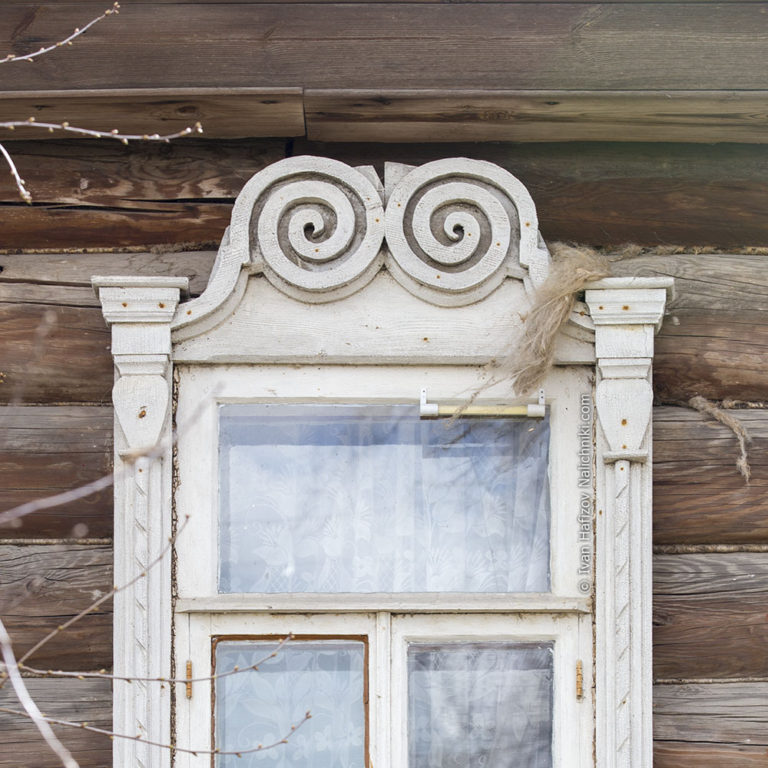
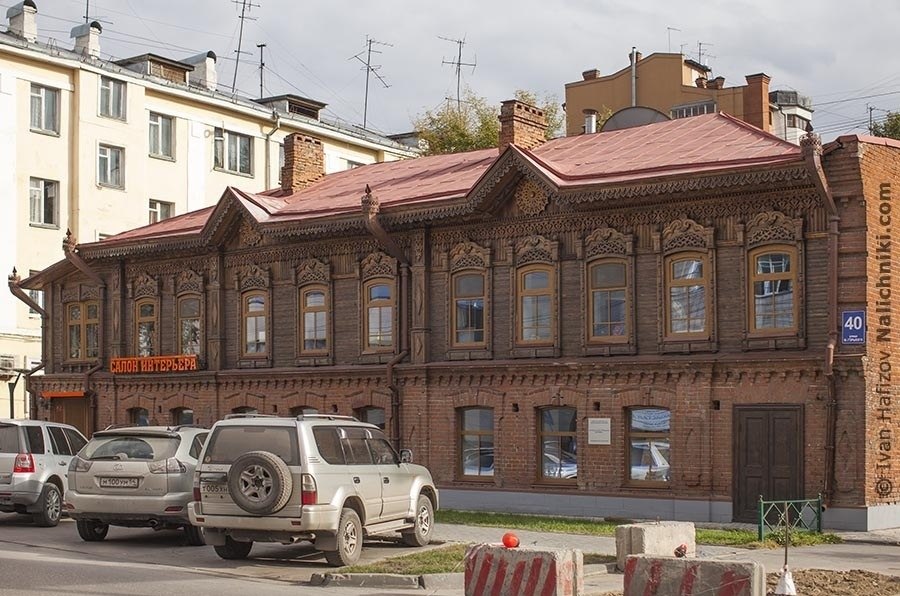
Volutes — the counter-scrolling curls that edge these nalichniki — are an ancient architectural motif, and their connection to nalichniki surprised me when I first looked into it. Of course they appear in architectural dictionaries, there's even a Wikipedia article, but the most interesting thing is this: born from wood, they migrated into stone architecture, and then, completing the circle, became wooden again.
The origins of the volute are lost in the Bronze Age — they appear on stone steles, tools, vessels, and ornaments. One theory holds they symbolize movement and life (somewhat like the swastika); another that they represent the element of water (somewhat like the meander). Researchers do agree on one point: the rounded ends of a split tree gave rise to the form.
Volutes became extremely popular in ancient Greece, adorning the capitals of columns. Later architects used them widely, especially during the Renaissance. They came to Russia in the seventeenth century and became one of the signature devices of Petrine Baroque — you can find them on the Peter and Paul Cathedral in St. Petersburg (1712) and on the Averky Kirillov Chambers in Moscow (1657).
Then, in the nineteenth century, as house carving was gaining momentum, there arose among Russian peasants something we might today call "Why should we be any different?" — and many elements from stone architecture began finding their way into carved nalichniki. Including the volute — which thus completed its circle and became wooden again.
PS These volutes are from Kashin, Tver Oblast.
But in general they can be found in many regions, where locals — having no idea they're part of such a long chain of evolution — have given them rather charming names of their own. "Spirals," "rams," "owl eyes," and "curlicues" — all of these mean volutes.