
 For a long time, I couldn't understand how people agreed to give interviews. I imagined that they'd ask something important and there would be nothing to say — or the person would talk nonsense, and the inner emptiness would become immediately visible, and everyone would see who he really was.
Then somehow those old worries got lost: I didn't read many interviews, and the ones I came across didn't reveal the subjects in any particularly alarming way, so I gradually forgot about those early fears.
Not long ago — after I had already told reporters many times about the nalichniki — I began to notice something completely different. Now it seems to me that everything is exactly the opposite: it's the interviewer who reveals himself to the person being interviewed, not the other way around.
Moreover, interestingly, my inner protest is triggered by exactly the same concerns: a bad question not only prevents the subject from opening up, but also exposes the emptiness, disinterest, or insincerity of the questioner — or even their desire to show off, which is hardly better than anything.
A very good, and at the same time funny, example of an interview that succeeded entirely because of personal interest is in Bridget Jones's Diary — remember? She was interviewing a politician, but instead of asking the "right" questions, she asked where he'd met his girlfriend — simply because that's what she actually wanted to know.
It's the same with nalichniki. The most unexpected and memorable question I was asked last year had nothing to do with nalichniki at all: "What do you listen to when you drive from city to city?"
And yes, the answer to it probably won't give a complete picture of the project. But to someone who is genuinely curious about something — even something as "narrow" as music on the road or the nuances of nalichniki carving in Kologriv — you find yourself ready to talk much more, and with much more enthusiasm.
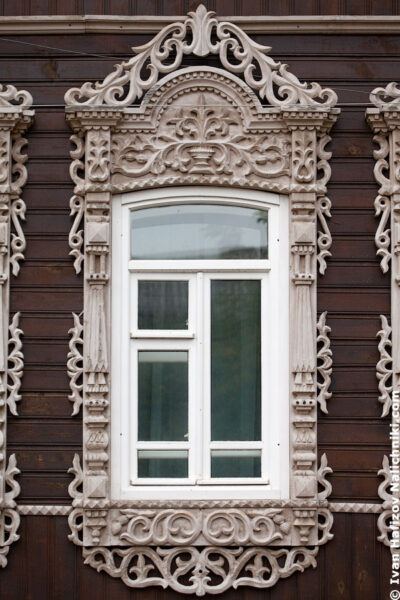
PS In the photo — #SergievPosad, #MoscowRegion
#nalichniki #WoodenArchitecture #RussianArchitecture


7 comments
Всё верно!
как аукнется.... ну, и банальность вроде "характеристика с места работы больше характеризует писавшего эту характеристику" )))
так и здесь - дежурные вопросы, дежурные ответы. Искренняя Заинтересованность - получи душу нараспашку.