

Window nalichniki of Tula
It's pleasant to study nalichniki when there are many of them and they're cared for. Pleasant to read about cities that inherit the values of previous generations, where the wooden architecture tradition passes from hand to hand. But that's not everywhere.
Tula is, so far, a rare case of wooden houses with nalichniki dying out. Many log buildings are abandoned, windows boarded up. Those wooden houses still inhabited appear to be on the verge of ceasing to be so. Most nalichniki here are without shutters, made with a combination of fretwork, applied, chip-carved, and sometimes sculptural techniques. Mostly around a hundred years old. Unpainted or in a single color.

This nalichnik clearly illustrates the current average state of wooden construction in Tula.


Nalichniki reflect the general attitude toward life: nice from the outside, but look closer and everything's a bit askew. No curtains, somehow neglected.


A quite remarkable nalichnik. Unfortunately I can't confirm the house was occupied — otherwise it would make a splendid illustration for "typical Tula nalichnik."


This nalichnik strongly reminds me of its Ural and Siberian cousins — Tyumen, most of all. The same elongated form and the same powerfully rough upper section.

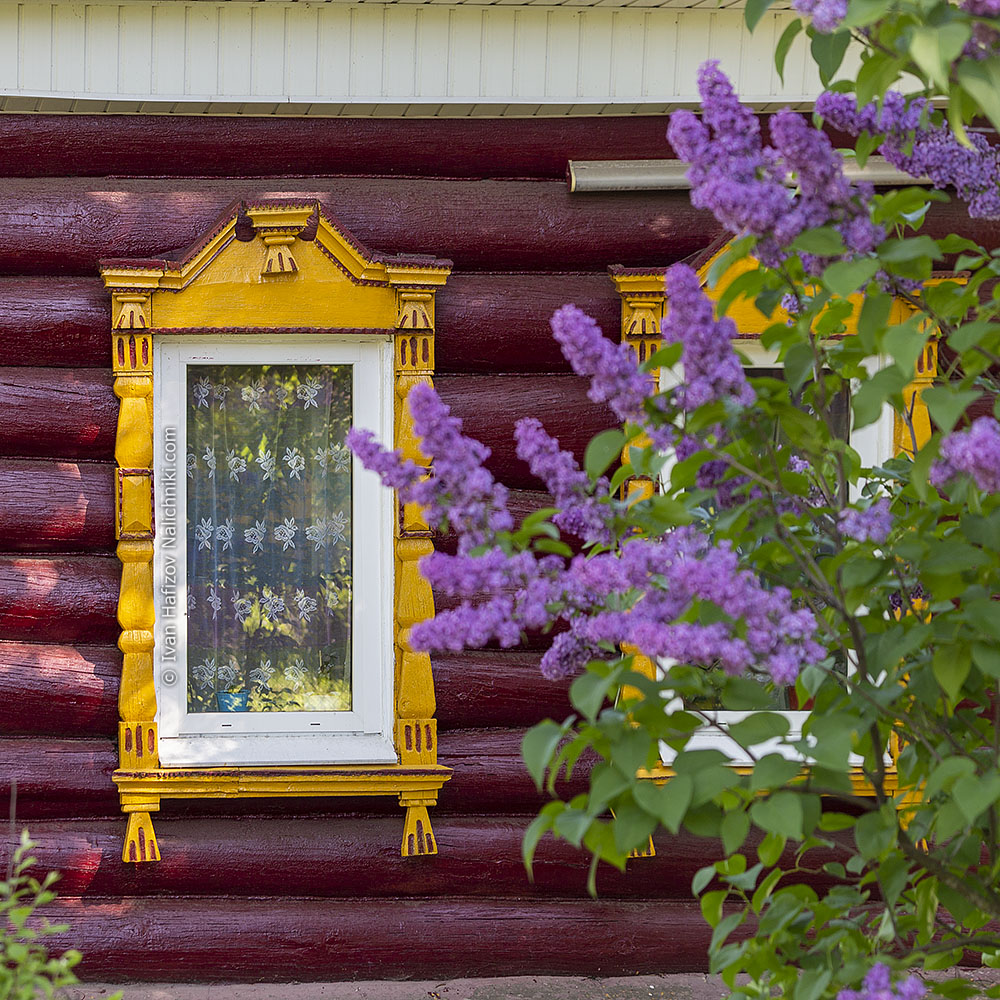
When I visited Tula, I didn't yet know that this nalichnik is the most common type in the town of Borisoglebsk, Voronezh Oblast. The triangular crown and characteristic figured half-columns at the sides make it very recognizable.

This nalichnik puzzles me. Its maker used flat chip carving — a technique whose traces are nowhere else visible among Tula's nalichniki.


Here's an element that repeats across nalichniki — the figured serpent. Though (I know specialists will agree) calling it "traditionally Tula" is probably a stretch.


A rare case for Tula — a nalichnik with shutters. Perhaps there were more once, but those houses were demolished. Or perhaps there were always few.


Another distinctly Siberian nalichnik. And with a rare plant pattern for Tula.

The overall impression that Tula's nalichniki leave is a dispiriting one. Grey, dejected, half-abandoned. It's hard to believe it was always like this. And sad to think other cities might come to look like this too.



2 comments
А адреса на открытках конечно нет. Вообще не так давно стал записывать трек на GPS, а раньше и не сохранял информацию о том где что снято. Во-первых это долго, а во-вторых все-таки это частные дома. И вопрос указания адреса весьма деликатный.