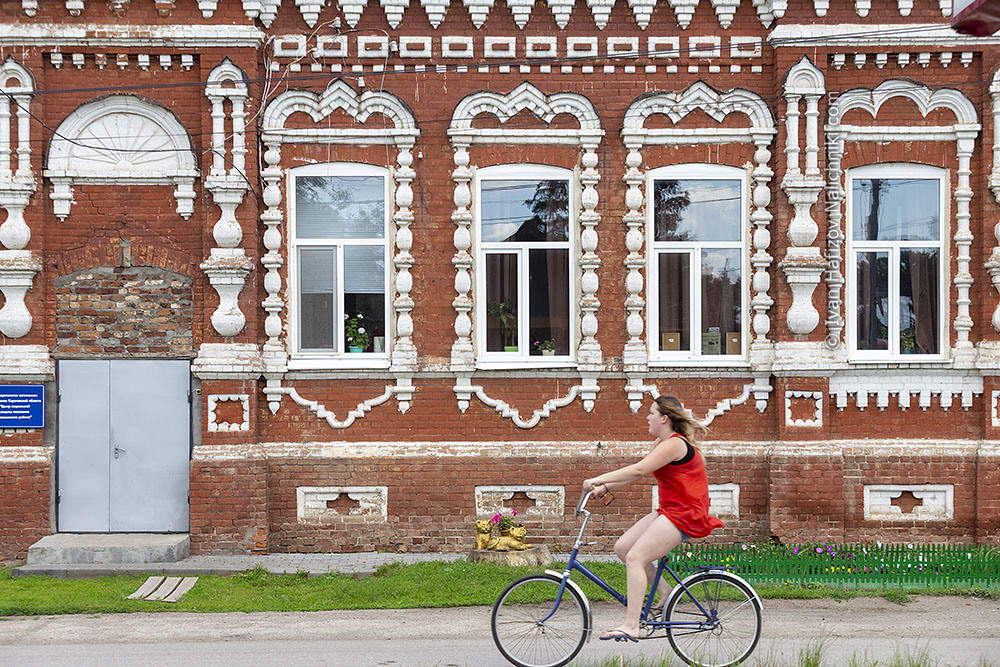
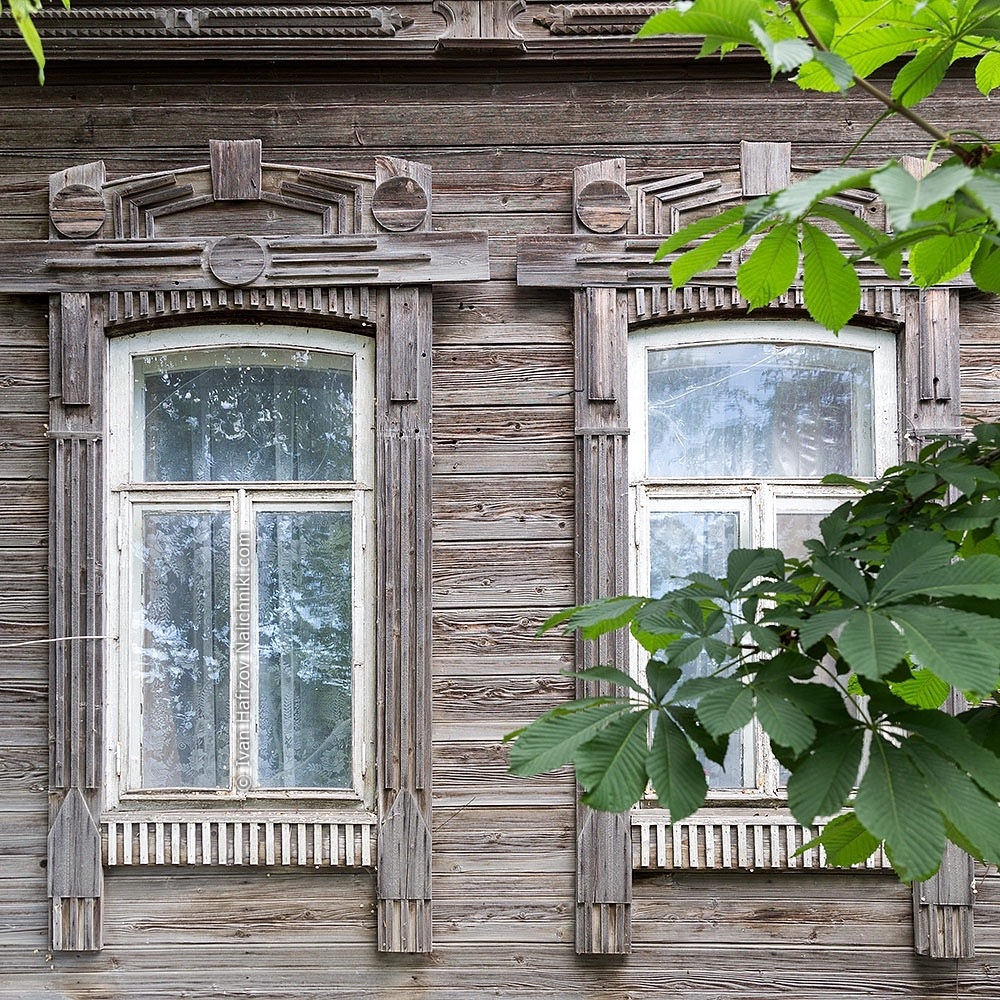
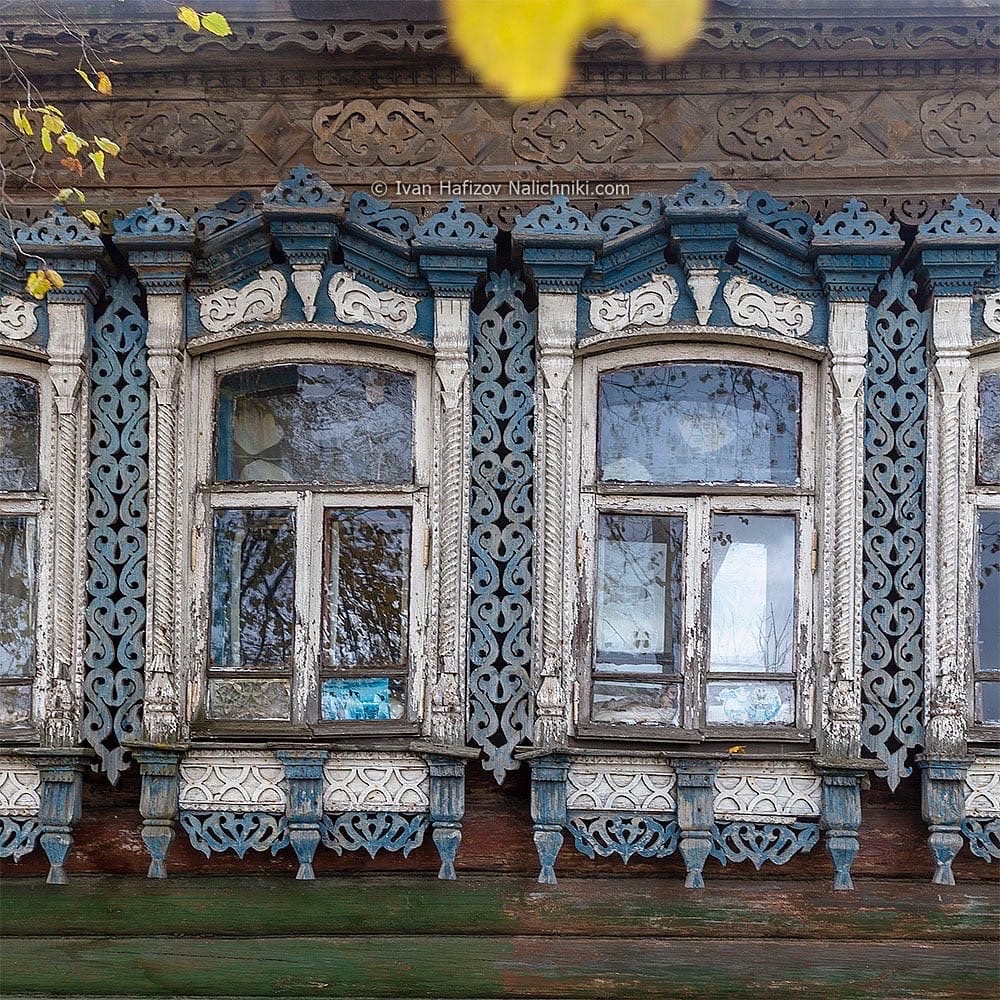
…— Excuse me, do you know why houses around here all have three windows on the front, but this one has two?
— Just because, I guess someone wanted it that way. Does everything have to follow a rule?
***
…— And by the way, you know that three windows on the front isn't accidental! It's not by chance. It means God loves the Trinity, that's what! There you go. — Then why do some houses have four? Or five, which is also pretty common?
— Will you drop it! God loves everybody, what's so hard to understand?
***
…— There are a lot of two-window houses around here — do you know why that is?
— Poor folk settled here, it's the outskirts. Small little houses, two windows, tiny ones even. Those with a bit more money would build on later or move away. But this is a low-lying area — only the poor settled here. And whoever wanted to, whoever could afford to — moved away eventually, didn't stay.
***
...— I can't tell you about three windows, but I know about four. Why four isn't done. I know that. Want me to tell you?
— Oh! Yes, of course!
— I watched a program about it. They explained it there. It's death, that's why. Our ancestors weren't stupid. Four means death in Japanese, you know. That's why they didn't do it. Not stupid, our people. But now they do. Nobody knows anything anymore. Nobody. So they just do it.
***
…— I see you have three windows on the front, and your neighbors have two — do you know why?
— Any fool can see that: where Orthodox Christians lived, it's three; where the heathens of various kinds lived — God knows what they had, two or four. Maybe three even. Nobody told them what to do.
***
Seriously, though.
The number of windows on the front of a wooden house could vary quite freely, and did (you can see this in the engravings of Adam Olearius — they show clearly that windows were cut wherever needed, with no thought of symmetry whatsoever). But in the early nineteenth century a document appeared that regulated the exterior appearance of facades: the Collection of Façades Most Graciously Approved by His Imperial Majesty for Private Buildings in the Cities of the Russian Empire. First it was introduced in St. Petersburg and Moscow, then in the provincial cities.
The Collection of Façades was entirely grounded in the rules of classicism — symmetry, an odd number of windows, and an even number of columns (if any). These rules held for more than half a century, and their influence spread not only to the architecture of the provincial cities themselves but to all other towns and even villages. Those who could afford a larger house built it "city-style" — with three windows, or with a partition wall — five. Those with less money built with two, or even one.
PS And the photos of two-windowed little houses are from Saratov region.