On a bench by a green fence, four people murmur in quiet conversation. The grandmothers are the brighter ones—each with a noticeable accessory: a vividly patterned scarf or, in one case, red hair to match her jacket. The man, as expected, wears something “practical.”
— Hello!
I call out from a distance.
— Do you happen to know what year this house was built?
— Built in fifty-nine.
The grandmother in the orange scarf reports briskly, gripping a hefty walking stick on her knees—sturdy enough to be called a staff.
She’s brisk enough, but there’s wariness in her gaze.
— And do you know if there are any older houses around?
I try again.
— That one’s from forty-six.
She gestures toward the neighboring house, stripped of any decorative carving.
"What is this?" I think. "I approached them hoping for a chat, but only one grandmother answers, and even then, so curtly! And that suspicious stare…"
— So this one’s postwar too? — I marvel, more than usual. — And I don’t see any nalichniki. The carved kind, with nalichniki—the old ones—surely some have survived?
— Well, no. There were some with carving, but they’ve all been taken down, — she answers again.
— So there’s only one old house left, then?
The frailest grandmother, seated on the far right, adds cautiously, almost in a whisper.
— But that one doesn’t have trims either!
The first one immediately corrects her.
— It doesn’t?
She looks confused.
— Are there really no old houses left? What about that one?
I point to a building a little farther to the left. Its logs, thick and worn, seem to murmur stories of their age—and, truth be told, of the modest means of those who built it.
— That’s a shed!
The “senior” grandmother nearly chokes with laughter.
— But go ahead, take a picture if you need to!
— But it doesn’t have nalichniki!
I laugh.
— I need ones with trims.
— And what for?
The red-haired woman speaks up.
— For the Window Trim Museum.
— Oh, I don’t know—
The first grandmother interrupts again.
— Drive down the street, maybe somewhere… Hmm… I don’t know… Not on Bolnichnaya either…
— Or an old house in Elizarovo?
Suddenly the man chimes in.
But he is immediately hushed:
— No trims there, none at all!
And he falls silent again.
The conversation is going nowhere, and I’m already preparing to take my leave when, suddenly, the frail grandmother speaks again. Her voice is creaky—and it is precisely this that makes it especially lovely.
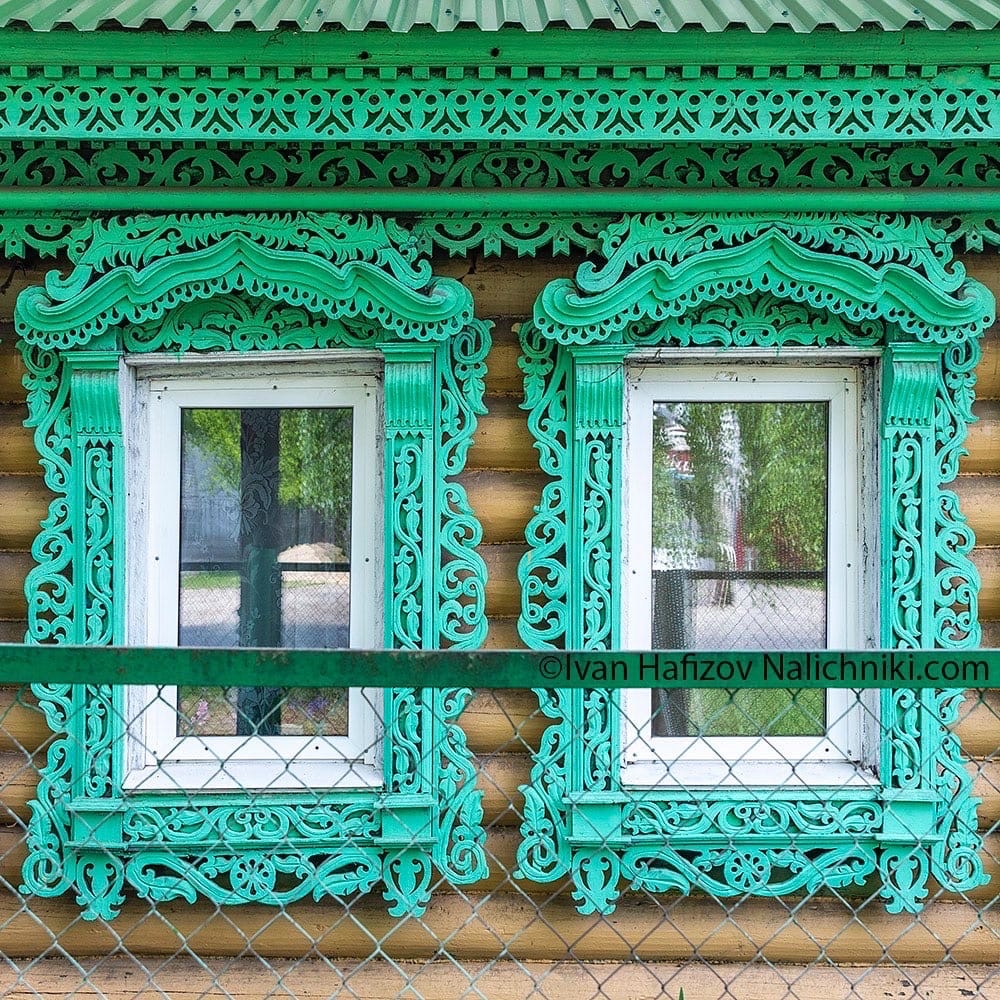
— I used to have beautiful trims, but I took them down. Had new windows put in, so I removed them. It’s a pity, of course. They were just like the ones behind you.
I turn, puzzled, and look at yet another ordinary house, with no hint of carvings. Then I turn back to them, meet the grandmother’s eyes. She studies me, her lips barely moving. A glint of amusement flickers in her eyes. Then, leaning in ever so slightly, she whispers:
— On your back.
The whole bench erupts in laughter.
I laugh too, finally realizing—I’m standing before them in my sweatshirt, with my favorite nalichnik printed across the entire back, from Zlynka—a town not far from here, also in Bryansk Oblast. She had apparently noticed earlier.
As the laughter fades, the senior grandmother speaks again:
— What about us? Do you need us instead of trims?
"What luck!" I think.
— Of course! Would you like to?
— We would! Nina Ivanovna, sit down!
She barks at her neighbor, who had started to rise.
— On the Internet! Sit down! For history! This is Krasnaya Gora, all of us, old and young! Go on, take the shot!
I take the photo, unable to hide my smile.
— Great pose!
— Thank you!
The grandmother in the orange scarf suddenly turns coy.
For several minutes, they all huddle around my camera screen, studying the picture together. No one has glasses, so it takes a while. When I finally get my camera back, the sky flashes faintly, and a second later, thunder rolls.
— Oh, I say, suddenly remembering that my car is parked several streets away, — I should run before it starts pouring! You should probably go too, don’t want to get soaked.
But instead of nodding, they erupt. The quiet pensioners vanish—suddenly, it’s as if I’m surrounded by a noisy flock of excited teenagers, voices tumbling over each other in a rush:
— Took long enough!
— Oh, it’s about time!
— We’ve been waiting for this!
— We haven’t had rain at all!
— I was in the garden today…
— …everything is dry, all dried up!
— …not once this year!
— …we planted, but no rain!
— …we’re watering everything ourselves, only us!
A second thunderclap silences them all—except for the frail grandmother.
— I checked on my zucchini today, they’re just lying there in the beds…
— Lying there—does that mean they’re not sprouting?
I interject before anyone else can start up again.
— Not sprouting at all,
she explains.
— Just lying there. It’s too dry!
— Well, it’s coming now, it’ll pour!
The senior grandmother exclaims, looking up at the sky.
— Yes, let it rain, God willing, soak the earth well!
The man agrees, then turns to me:
— You’d better run, run! Or you’ll get drenched!
— Wait, so I’m the only one here not happy about the rain?
I look at them in disbelief.
— Yes!
They all laugh in unison.
— We need this rain so badly!
— We can’t do without it! But you’re a tourist,
the senior grandmother, still wiping away tears of laughter, points out.
— Tourists are supposed to fear the rain! Now run along!